

Multimedia | journal
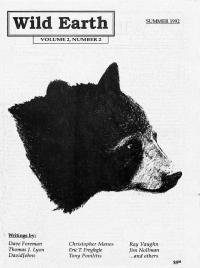
Wild Earth 2, no. 2
Wild Earth 2, no. 2., with an update on the Wildlands Project and essays on: forest health and forestry, the practical relevance of deep ecology, and ancient forest legislation.
Wild Earth 2, no. 2., with an update on the Wildlands Project and essays on: forest health and forestry, the practical relevance of deep ecology, and ancient forest legislation.
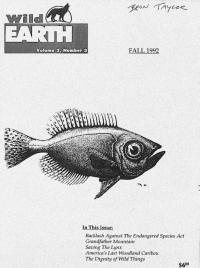
Wild Earth 2, no. 3 about the Endangered Species Act, saving the Lynx, bioregionalism, and America’s last woodland caribou.
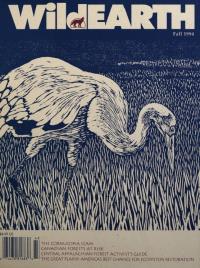
Wild Earth 4, no. 3 features Canadian forests at risk, an activist’s guide to Central Appalachian forests, citizen involvement in mining issues, a proposal for a Thoreau Regional Wilderness in northern Maine.
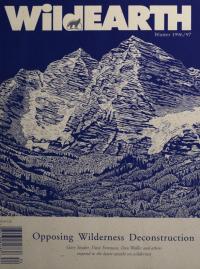
Wild Earth 6, no. 4 features essays opposing wilderness deconstruction. Gary Snyder writes on nature as a social construction, Dave Foreman contributes a piece on the conservation opposition’s underlying views, and Don Waller discusses the evolution of wilderness concepts.

James P. Sterba offers clarifications to Brian Steverson’s objections to his original reconciliationist argument and notion of intrinsic value.
Christopher Williams discusses the personal, social and cash costs of environmental victimization, using psycho-social literature and brief case studies of intellectual disability, road transport, and cross-border pollution.

Annie L. Booth discusses environmental spirituality.
Jost Halfmann illustrates the differences between images of risk by comparing the American and German anti-nuclear movements.
Michael Lockwood synthesizes insights from philosophy, psychology, and economics towards an understanding of how humans value nature.
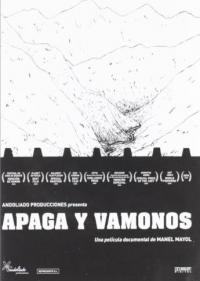
One of the world’s largest dams, Ralco, on the river Biobío in Chile, opened in 2004 after numerous clashes with the Mapuche people. The land of this ancient indigenous community has been flooded by Endesa, the Spanish multinational company.