

Multimedia | journal article
Review of Conservation from the Margins by Umesh Srinivasan and Nandini Velho (eds)
Manish Chandi reviews the book Conservation from the Margins, edited by Umesh Srinivasan and Nandini Velho.
Manish Chandi reviews the book Conservation from the Margins, edited by Umesh Srinivasan and Nandini Velho.

This article explores the social and ecological legacies of the peat industry in Russia and the different meanings that people attach to peatlands after the end of peat extraction.

This article investigates the origins of the exploitation of sperm whales off the Brazilian coast in the eighteenth century.

Mount Lebanon’s distinctive environmental history accounts for its susceptibility to famine.
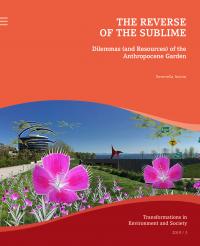
Serenella Iovino uses the garden as a lens to analyze the impacts of old and new forms of aestheticizing nature on the geology of our planet.

Once the largest toxic e-waste dump in the world, government investment in environmentally sustainable recycling has begun to change Guiyu.

Erin Ryan shares her work on negotiated federalism, exploring how good multiscalar governance is often the product of intergovernmental bargaining among decision makers at various levels of government.

This article tells the epic tale of the fall and rise of Mono Lake— the strange and beautiful Dead Sea of California—which fostered some of the most important environmental law developments of the last century.

Erin Ryan argues that environmental law is uniquely prone to federalism discord because it inevitably confronts the core question with which federalism grapples—who gets to decide?—in contexts where state and federal claims to power are simultaneously at their strongest.
In the United States, debate over the responsibilities of different levels of government are framed within our system of constitutional federalism, which divides sovereign power between the central federal administration and regional states. Dilemmas about devolution have been erupting in all regulatory contexts, but environmental governance remains uniquely prone to federalism discord because it inevitably confronts the core question with which federalism grapples—“who gets to decide?”— in contexts where state and federal claims to power are simultaneously at their strongest.