Das grüne Gold der Inkas [Big Spuds, Little Spuds]
This film examines the effects of mass monoculture farming and traces Idaho potatoes back to the Peruvian highlands.
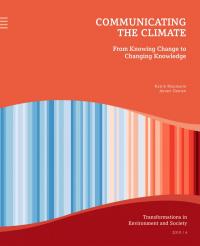
Oomen argues that science has an important role in climate communication as a common ground and honest broker.
Shortis suggests that the World Park Antarctica campaign offers a positive example of an environmental campaign that includes but does not center scientific authority.
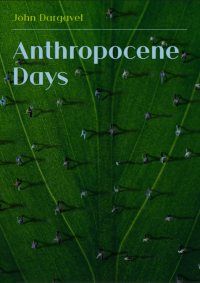
A book by John Dargavel on how humans experience the Anthropocene in everyday life.
Through an ethnographic account about the use of an electromagnetic water system in the Amish community, Nicole Welk-Joerger explores the conceptual meeting ground between sacred and secular worldviews in efforts that address the Anthropocene.
SueEllen Campbell argues that effective simplification is needed to promote high-quality information.
The Age of the Anthropoiescene is a time of sympoietic tanglings with the human and more-than-human ghosts of deep time.
Manifesto for Living in the Anthropocene argues that the current climate crisis calls for new ways of thinking and producing knowledge, suggesting that our collective inclination has been to go on in an experimental and exploratory mode, in which we refuse to foreclose on options or jump too quickly to “solutions.”
An analysis of the book Gun Island by Amitav Ghosh.
Excerpt from RCC fellow Jemma Deer’s monograph Radical Animism: Reading for the End of the World.