"Dead Museum Animals: Natural Order or Cultural Chaos?"
Libby Robin discusses animals in museums, and how taxidermy has changed from art in the service of science to the backbone of art itself, both in museums and beyond.
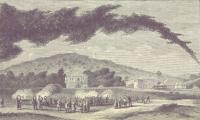
Libby Robin discusses the implication of Sir Colin MacKenzie’s initiative to collect Australian marsupials.
This article discusses how local perspectives influence the recognition and control of a locust outbreak.
In this introduction to a special issue on human-nature interactions through a multispecies lens, the authors focus on the notion of “multispecies assemblages” and their role in conservation theory and practice at the intersection between ecology, history, and society.
The author explores the relationship between humans and tigers in the Sino-India border and their opposition to plans to institute a wildlife sanctuary in the region.
The paper analyzes pangolin trafficking among South and Southeast Asian countries, shedding light on the commodity chain linking the hunters and consumers of pangolin across South, Southeast and East Asia.
The author seeks to bring together environmental anthropology and history to frame the place of forests in humans’ lives, from a political ecology point of view. He does this by reflecting on his personal experiences in Northeast India, Kenya, and Sweden.
Drawing on interviews with 25 Australian environmental leaders, the authors ask how international instruments with cosmopolitan ambitions influence the discourse and practice of national and subnational environmentalists attempting to find common ground with Indigenous groups.
This article explores the prospects and politics of indigenous participation in multi-sector conservation, using the case of the Boreal Leadership Council (BLC) in Canada. It concludes that multi-sector conservation creates both new possibilities for indigenous empowerment and new forms of marginalization through the reproduction of a (post)colonial geography of exclusion.
The author analyzes the increase of human-wildlife conflict (HWC) in Mozambique’s Limpopo National Park due to conservation-induced displacement.