

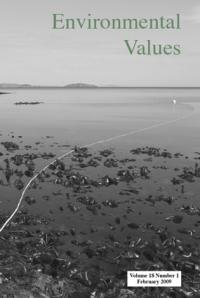
Multimedia | journal article
"Was Aldo Leopold a Pragmatist? Rescuing Leopold from the Imagination of Bryan Norton"
This article examines whether and how Aldo Leopold was influenced by American Pragmatism, a formal school of philosophy.
This article examines whether and how Aldo Leopold was influenced by American Pragmatism, a formal school of philosophy.
This paper examines the relationship between technologies that aim to remediate pollution and moral responsibility. The authors argue that such technologies do not exculpate polluters of responsibility.
This article reaches the conclusion that, contrary to what has often been thought and recently argued, the impact of Darwin’s theory is precisely to liberate us to lead the most meaningful of lives.
This article takes a closer look at the Polish culture of nature. Visions of nature are defined as public views on what nature is, what values are carried by nature and what is the appropriate relationship between humans and nature.

The 2015 edition examines what we think we know about environmental damage and the hidden threats to sustainability we need to recognize.
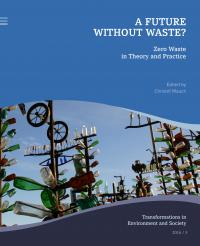
Though a desirable environmental prospect, many wonder if zero waste is a realistic goal or merely a pipe dream. Starting from an analysis of the laws of thermodynamics, this article argues that it is an impossible ideal; however, along with the principles of the circular economy and reform of modern economic systems, the idea of zero waste can provide valuable insights into how we can establish a future ecological civilization.
Inspiration for sustainable waste policies and management will likely come from countries in the Global South, where consumerism and discard-oriented production are not yet fully established, where economies are less fixated on growth, and people’s lifestyles are not yet “cocooned in the consumption bubble.” Drawing on examples of informal and cooperative recyclers in Brazil, Gutberlet argues that these workers have developed effective practices and policies supporting circular economy, sufficiency, and solidarity.

This article, “Artificial Apple Production in Fraiburgo, Brazil, 1958–1989,” by Jó Klanovicz explores connections between the “domestication” of apples in Southern Brazil, the polemic on contaminated apples in 1989, and the reactions of the apple industry to the news published in the press on the use of pesticides in Brazilian orchards.