

Multimedia | book excerpt
Vital Decomposition: Soil Practitioners and Life Politics
Excerpt from Vital Decomposition: Soil Practitioners and Life Politics by Kristina Lyons.
Excerpt from Vital Decomposition: Soil Practitioners and Life Politics by Kristina Lyons.
Gay Hawkins puts the ethical significance of waste in everyday life into historical, social, and cultural perspective, seeking to change ecologically destructive practices without recourse to guilt, moralism, or despair.
Wild Earth 9, no. 1 features essays on wilderness and spirituality. They center around two slogans: “Rewilding Ourselves” and “Rewilding the Land.”
The 2014 edition, marking the Institute’s fortieth anniversary, examines both barriers to responsible political and economic governance as well as gridlock-shattering new ideas.
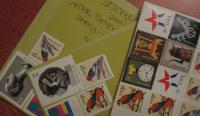
A chapter of the virtual exhibition “Beyond Doom and Gloom: An Exploration through Letters,” this letter shows apprecation to the hopeful spirit of Rachel Carson. The exhibition is curated by environmental educator Elin Kelsey.

In Wild Earth 5, no. 3 Wendell Berry writes about private property and the Commonwealth, Thomas P. Rooney reflects on global warming, and Paul J. Kalisz analyses sustainable silviculture in the hardwood forests of the eastern United States.
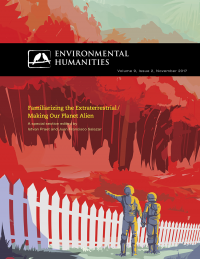
Katarzyna Olga Beilin and Sainath Suryanarayanan discuss the intertwined nature of movements of resistance by humans and plants struggling against genetically engineered soy monocultures in Argentina, which they provocatively conceptualize as interspecies resistance.

Wild Earth 4, no. 2 features Wendell Berry on “A Walk Down Camp Branch,” Howie Wolke’s “Butchering the Big Wild,” and William R. Catton, Jr., on “Carrying Capacity and the Death of a Culture.”
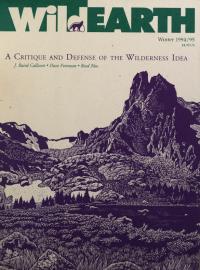
This issue of Wild Earth celebrates the third year of the Wildlands Project featuring the theme “A Critique and Defense of the Wilderness Idea,” as well as essays on: falcons in urban environments, state complicity in wildlife losses, and common lands recovery.
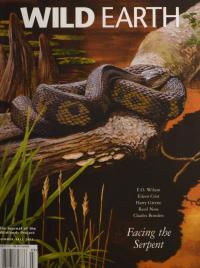
Wild Earth 13, no. 2/3, features essays on the biological and cultural significance of snakes, the populist right in America, rednecks as wildlife managers, and mosquitoes across the Florida Everglades.