

Multimedia | film profile
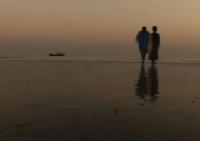
Where is My Home?
This is a portrait of an environmental migrant from the Sundarbans, West Bengal, who, like thousands before her, is vulnerable and powerless against the fury of the sea.
This is a portrait of an environmental migrant from the Sundarbans, West Bengal, who, like thousands before her, is vulnerable and powerless against the fury of the sea.

Die Natur der Gefahr traces the history of the Ohio river, its significance for trade and industry, and its flooding disasters between the late eighteenth century through to the twentieth century.
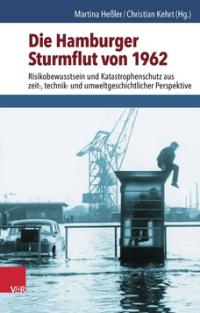
Die Hamburger Sturmflut von 1962 is an in-depth historical study of the 1962 storm flood that devastated Hamburg and Germany. It compares the flood to others in the eighteenth and nineteenth centuries, while reflecting on the sociocultural and technological contexts of the time.
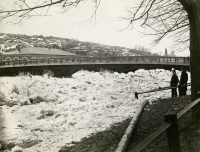
Historical documents provide detailed descriptions of ice-jam flood events and climate impacts in riverine communities.
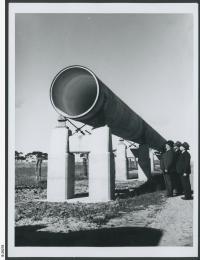
In this chapter of the virtual exhibition “Drought, Mud, Filth, and Flood: Water Crises in Australian Cities, 1880s–2010s,” the authors describe how the city of Adelaide has responded to periodic water shortages. Water security was sought first in reservoirs, then the Murray River, and more recently desalination. While earlier periods of shortage led to the development of the dual-flush toilet, the need for water conservation was only really cemented in the urban consciousness with the Millennium drought of 1996–2010.
On Water showcases the range of disciplines and methodological approaches that are brought together at the Rachel Carson Center for Environment and Society. In this volume, nine scholars affiliated with the RCC present their research in the fields of history, philosophy, literary studies, geography, and cultural studies.
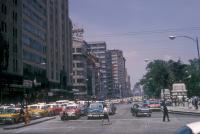
A noxious air forces Mexico City to confront its unwavering urbanizing and industrializing mission in the late twentieth century.

In this chapter of the virtual exhibition “Drought, Mud, Filth, and Flood: Water Crises in Australian Cities, 1880s–2010s,” the authors show the extent to which the people of Perth, Western Australia, have relied on the groundwater of the Swan Coastal Plain, and the implications of this reliance in a drying climate. In the context of private and public extraction of groundwater, the government in 2014 commenced a groundwater replenishment scheme to “recharge” the local aquifers with treated wastewater.
By re-visiting the sources for the 1348 earthquake following the studies of Borst (1981) and Hammerl (1992) and looking at aspects of its perception, management and explanation, this article calls into question the supposed ‘medieval’ equation of natural disaster and divine punishment.
This volume explores the potential contribution memory studies can make to policymaking, in particular on conservation and disaster resilience.