

Multimedia | image
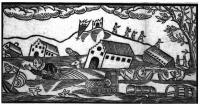
Broadsheet: “The Great and Terrible Flood,” January 1651
Potrayal of the devastation caused by a massive flood along stretches of the Danube, Neckar, Main, and Rhein in January 1651.
Potrayal of the devastation caused by a massive flood along stretches of the Danube, Neckar, Main, and Rhein in January 1651.
Fredriksson et al. discuss the relationship between flood risk management and collective memory.

Research on climatic variations in the sixteenth century has stressed the exceptionality of extreme events, but the case of the lower Po basin, where lack of instrumental data renders the concept of exceptionality complex and relative, shows that this is not necessarily valid.
The present investigation examines the resonance of such catastrophes in the correspondence network of the universal scholar Albrecht von Haller (1708–77).
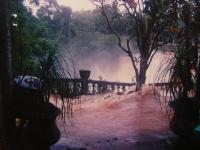
José Paronella’s dream continues at Paronella Park despite catastrophic flood and cyclonic events.
The paper addresses various ways that water is constructed as “dangerous,” whether because there is too much (floods), too little (droughts), or because it is polluted. Mauch emphasizes that although water catastrophes have a natural origin, their effects are primarily social.
Different interpretations of the biblical deluge give us an idea of various modes of perceptions of natural disasters in the seventeenth and eighteenth centuries. In analysing these interpretations we learn much about early modern European ways of thinking about nature, mankind and the relationship between both.
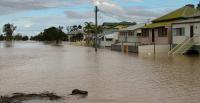
Rivers need property rights so that humans can live with floods.
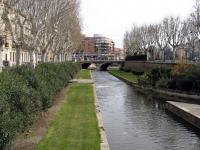
Late medieval efforts at river management to control floods in the county of Roussillon reveal environmental awareness and responsibility in an emerging state and also the grounds and strength of local resistance.
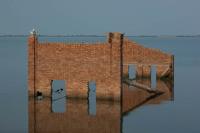
In November 1951 the Polesine, a flatland enclosed by the rivers Po and Adige in northeastern Italy, was hit by massive flooding. Hundreds of hectares were submerged and tens of thousands of people left homeless. The effects of a particularly heavy wet season were compounded by insufficient flood defenses.