

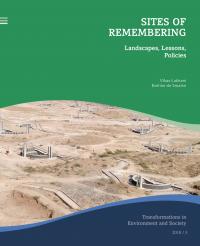
Perspectives Article
Using Historical Storms for Flood Risk Management: The 1872 Storm in South Sweden
Fredriksson et al. discuss the relationship between flood risk management and collective memory.
Fredriksson et al. discuss the relationship between flood risk management and collective memory.
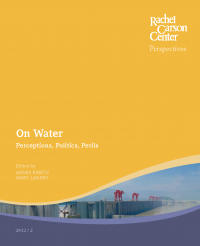
The paper addresses various ways that water is constructed as “dangerous,” whether because there is too much (floods), too little (droughts), or because it is polluted. Mauch emphasizes that although water catastrophes have a natural origin, their effects are primarily social.
Colten and Grismore examine the Amite River flood in August 2016 against the backdrop of collective flood memory and public policy.

Susanne Leikam explores the extreme weather hero and performed masculinity in contemporary American pop culture through an analysis of the 2013 film Sharknado.
On Water showcases the range of disciplines and methodological approaches that are brought together at the Rachel Carson Center for Environment and Society. In this volume, nine scholars affiliated with the RCC present their research in the fields of history, philosophy, literary studies, geography, and cultural studies.
This volume explores the potential contribution memory studies can make to policymaking, in particular on conservation and disaster resilience.
Using Yung Chang’s 2007 documentary film Up the Yangtze, Weik von Mossner unravels the power struggles accompanying the construction of the world’s largest hydroelectric power plant—the Three Gorges Dam in China.
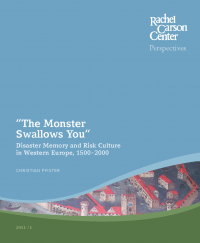
In this issue of RCC Perspectives, Christian Pfister examines disaster memory and risk culture. In contrast to the memory of war, the memory of natural disaster is markedly short-lived in a globalized world, yet such memory should be preserved in order to minimize the impact of similar disasters in the future.