The Last American
In this fictional future history, written by the co-founder of Life magazine, the Persian prince and admiral Khan-Li records his astonishing journey through the ruins of “Nhu-Yok,” the famed city of the extinct “Mehrikan” people.

This podcast reports on two sessions from the sixth conference of the ESEH, which took place in Turku, Finland, from 27 June to 2 July 2011.
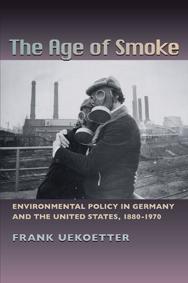
A comparative history of environmental policy development in Germany and the United States from 1880 to 1970, and the rise of civic activism to combat air pollution.
David Pearce analyzes the features and possible outcome of green economics.
Economics and contemporary ethical theory must come to terms with the fact that not everything from consumer goods to endangered species can be given a value in order to make them comparable.
A new perception of time is needed to help predict the long term effects of climate change on the environment as well as on human social systems.
Steven Luper-Foy offers a defence of the resource equity principle from both points of view, the libertarian and the Rawlsian.
Sir Crispin Tickell scans what industrial countries can and have to do in order to give a lead in global arrangements to alleviate economic and ecological problems.
Bryan Norton differs between two types of sustainability definitions, ‘social scientific’ and ‘ecological’ ones, in order to define our moral obligation to act sustainably.
Mary Midgley explores if there is a necessary clash between concern for animals and concern for the environment as a whole.