

Multimedia | book profile
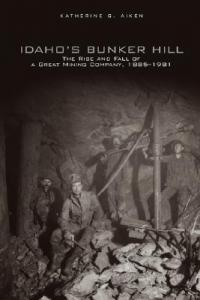
Aiken, Katherine, Idaho's Bunker Hill: The Rise and Fall of A Great Mining Company, 1885-1981
Katherine G. Aiken traces Bunker Hill’s evolution from the mine’s discovery in 1885 to the company’s closure in 1981.
Katherine G. Aiken traces Bunker Hill’s evolution from the mine’s discovery in 1885 to the company’s closure in 1981.
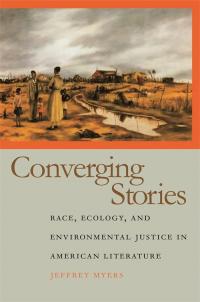
By looking at works by Native Americans, African Americans, European Americans, and others, and by considering forms of literature beyond the traditional nature essay, Myers expands our conceptions of environmental writing and environmental justice.

Presents state-of-the-art research on the impact of ongoing and anticipated economic policy and institutional reforms on agricultural development and sustainable rural resource in two East-Asian transition (and developing) economies—China and Vietnam.

Anthony Carrigan, Carson Fellow from January to June 2012, talks about his research concerning social disasters such as wars and ongoing chronic poverty that can develop from colonization.

This illustrated history recounts how, for the past three hundred years, hurricanes have altered lives and landscapes along the Georgia-South Carolina seaboard.

Tthe first comprehensive discussion of conservation in Nazi Germany.

Eagle Glassheim, Carson Fellow from February until April 2012, talks about his research project on the ethnic, social, and environmental transformation of Czechoslovakia’s Border Lands after 1945.

Anya Zilberstein, Carson Fellow from February 2012 until July 2012, talks about her project on prison gardens, especially the work of Count Rumford (Benjamin Thompson), who designed Munich’s English Garden in the late eighteenth century.
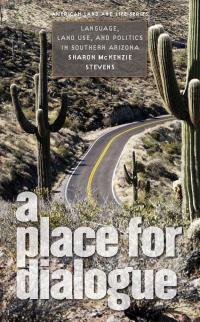
Sharon McKenzie Stevens views the contradictions and collaborations involved in the management of public land in southern Arizona through the lens of political rhetoric.

Christopher Bosso considers how organizations that once contested the Establishment have become an establishment of their own.