

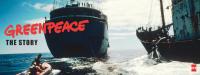
Multimedia | film profile
Greenpeace, The Story
This film recounts the formation and rise of Greenpeace as one of the world’s most prominent environmentalist organizations.
This film recounts the formation and rise of Greenpeace as one of the world’s most prominent environmentalist organizations.
Using the Central Coast of California as a case study, this article argues that a nexus of ambitious growers and a growing state agricultural bureaucracy worked to create a “brand name” and teach cultivation approaches with increased production and expanded markets. But these same actors also made efforts to keep the long-term health of the industry and the community in mind.
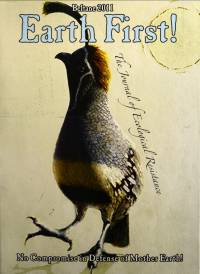
Earth First! Journal 31, no. 3 presents thoughts on jaguar recovery in the United States, ecocide and renewal in Iraq’s marshlands, South Florida forest defense work, and native land rights at Glen Cove.

In Wild Earth 5, no. 3 Wendell Berry writes about private property and the Commonwealth, Thomas P. Rooney reflects on global warming, and Paul J. Kalisz analyses sustainable silviculture in the hardwood forests of the eastern United States.
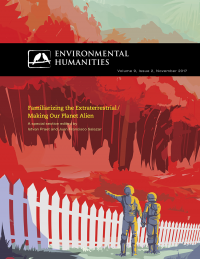
Katarzyna Olga Beilin and Sainath Suryanarayanan discuss the intertwined nature of movements of resistance by humans and plants struggling against genetically engineered soy monocultures in Argentina, which they provocatively conceptualize as interspecies resistance.
Wrenched captures the passing of the monkey wrench from the pioneers of eco-activism to the new generation who carries Edward Abbey’s legacy into the 21st century. The fight continues to bring awareness to the need for protection of the last bastion of the American wilderness - the spirit of the West.
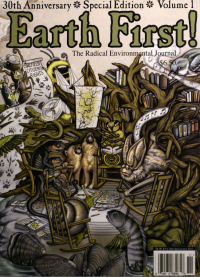
The 30th anniversary edition of Earth First! presents essays on “Deep Green Resistance,” “The Animal Enterprise Terrorism Act and the Assault on Academic Freedom,” and “Connecting Biological and Linguistic Diversity Crises.”
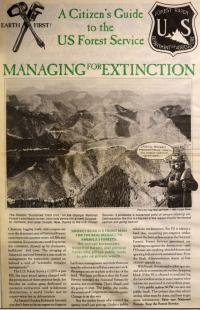
This Earth First! tabloid describes negative impacts of the U.S. Forest Service on national forests. Topics include reform proposals for the USFS, the role of deep ecology, the destruction of eco-systems across the U.S., abuse of Native American cultural heritage, and a call for the protection of national forests.
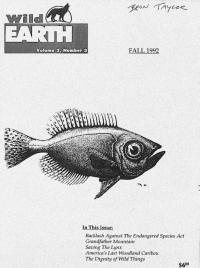
Wild Earth 2, no. 3 about the Endangered Species Act, saving the Lynx, bioregionalism, and America’s last woodland caribou.

Wild Earth 4, no. 2 features Wendell Berry on “A Walk Down Camp Branch,” Howie Wolke’s “Butchering the Big Wild,” and William R. Catton, Jr., on “Carrying Capacity and the Death of a Culture.”