Wild Earth 13, no. 2/3
Wild Earth 13, no. 2/3, features essays on the biological and cultural significance of snakes, the populist right in America, rednecks as wildlife managers, and mosquitoes across the Florida Everglades.
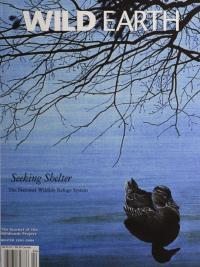
Wild Earth 13, no. 4, focuses on the National Wildlife Refuge System with essays on its history, the wildlife refuge in Southeastern Oregon, wildlands ofthe Great Plains, and pronghorn extinction in the Sonoran Desert.
Wild Earth 14, no. 1/2 features essays on protecting the national forest wilderness after the Wilderness Act, natural history going extinct, carnivore conservation in the Rocky Mountains, and questions of fertility.
Wild Earth 14, no. 3/4, is the last issue of the Wild Earth Journal. It presents essays on connectivity and long-distance migration in human-fragmented landscapes, the Great Bear Rainforest archipelago, and rewilding Patagonia.
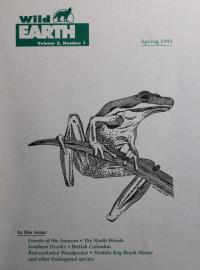
Wild Earth 3, no. 1 on the Northwoods wilderness recovery, the Southern Ozarks, endangered species like the Red-Cockaded Woodpecker and the Perdido Key Beach Mouse, and the breadth and the limits of the deep ecology movement.
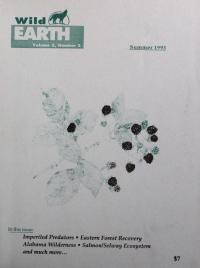
Wild Earth 3, no. 2 on imperiled predators like bears and lions, the Eastern forest recovery, Alabama wildlands, deep ecology in the former Soviet Union, and the salmon/selway ecosystem.
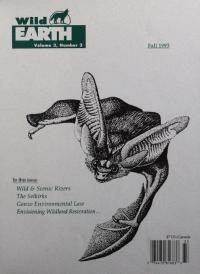
Wild Earth 3, no. 3 features articles on protecting biodiversity in the Selkirk Mountains, preserving biodiversity in caves, restoring the Wild Atlantic Salmon, and changing state forestry laws.
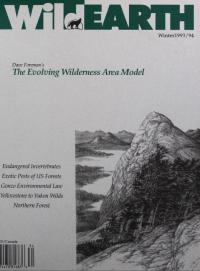
Wild Earth 3, no. 4 puts the spotlight on endangered invertebrates, exotic pests in US forests, the Northern Rockies Ecosystem Protection Act, and keywords of conservation and environmental discourses.
In Wild Earth 6, no. 1 Bill McKibben imagines new organizations like “MACHO” (Manly and Courageous Hunters Organization), Stephanie Mills visits Leopold’s shack, and Daniel Dancer seeks a deep photography ethic.
In Wild Earth 5, no. 4 Reed F. Noss reflects on what endangered ecosystems should mean to The Wildlands Project, and preliminary results of a biodiversity analysis in the Greater North Cascades ecosystem and a biodiversity conservation plan for the Klamath/Siskiyou region are presented.