

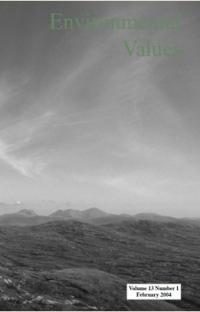
Multimedia | journal article
"Environmental Pollution and Professional Responsibility: Ibsen's A Public Enemy as a Seminar on Science Communication and Ethics"
Hub Zwart presents an environmental analysis of Henrik Ibsen’s A Public Enemy.
Hub Zwart presents an environmental analysis of Henrik Ibsen’s A Public Enemy.

The authors seek to ascertain if ASEAN can respond to regional human-induced environmental problems given existing problems of national sovereignty and the interest-based character of ASEAN-type associations, since ASEAN’s goal, in contrast to that of the EU, has been regional cooperation rather than regional integration. The aim is to highlight the status of the respective policy frameworks and exemplify areas in which the regions can learn from one another in the field of air pollution, given its global relevance for climate change.
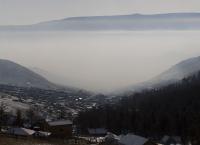
This article focuses on the complicated interactions between climate change and the lives of people in and near Ulaanbaatar, Mongolia.
From the late 1950s onward, Helsinki experienced air pollution from energy generation, industries, waste incineration, and traffic. After having been at its worst in the late 1960s the air quality in Helsinki eventually improved remarkably. This paper examines the reasons for this environmentally advantageous outcome, which was achieved in the absence of a particularly successful environmental policy.
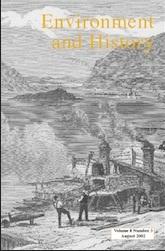
This article examines how riparian law governed the disposal of industrial wastes into watercourses in the United States in the nineteenth and early twentieth century.
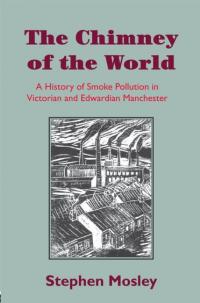
Stephen Mosley examines three aspects of Victorian and Edwardian Manchester’s smoke situation: its magnitude and impact on the town, the rhetoric and culture of smoke, and the (unsuccessful) campaigns to control it.

In 1969, the Danish environmental organization NOAH is established, following a spectacular happening at the University of Copenhagen.
In Britain, a large proportion of the soil and groundwater pollution that occurred during the nineteenth and first half of the twentieth century came from gasworks and coke plants…
This article outlines the “global P problem sphere” before moving to insights obtained from a Canadian case study that examines the opportunities of applying a paradigmatic focal shift to phosphorus understanding—“from noxious to precious”— as assessed and evaluated through the direct participation of local stakeholders.
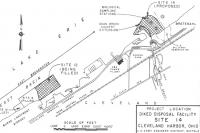
Environmental activism in the 1960s forced the Army Corps of Engineers to limit the open-water dumping of dredge spoils in the Great Lakes and create new “natural” areas along the shore.