

Multimedia | journal
Earth First! 4, no. 6
In this issue of Earth First! Mike Roselle tells the story of 15 protesters who were arrested for taking action against logging in the Middle Santiam, Oregon.
In this issue of Earth First! Mike Roselle tells the story of 15 protesters who were arrested for taking action against logging in the Middle Santiam, Oregon.
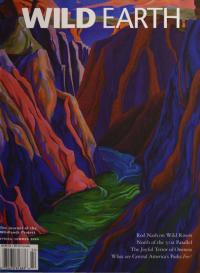
Wild Earth 14, no. 1/2 features essays on protecting the national forest wilderness after the Wilderness Act, natural history going extinct, carnivore conservation in the Rocky Mountains, and questions of fertility.

This undated, pseudonymous document is a primer on direct action methods.
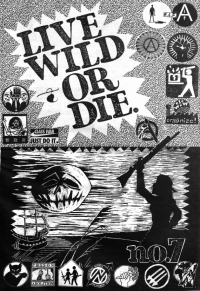
Live Wild or Die! no. 7 declares its attempt to be “unity” issue, crossing the boundaries that separate different movements. The issue covers fascism, work as wage-slavery, green anarchy, the millennium bug, and sexual liberation.
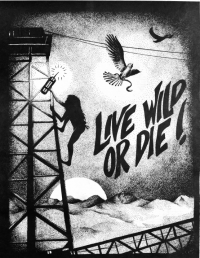
In this first issue of Live Wild or Die! the editors ask, “why be modest in the face of impending doom? Live wild or die!” Toby discusses how biocentrism can lead to destruction of nature; Feral Faun explains why there is more to the Earth First! movement and why the name should be left behind; Sneaky Driller sheds light on tree spiking; and Sheriff Jim Weeds explains the deeper meaning of ecoterrorism.

The documentary explores the lives of five young people who have decided to become small-scale farmers.
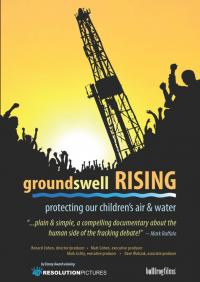
This film shows how the oil and gas industries, rich with political connections, obtained a position of almost untouchable power and how at-risk communities have united to fight back.
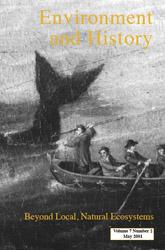
This essay considers medieval long distance trades in grain, cattle, and preserved fish as antecedents to today’s globalised movements of foodstuffs.
This issue of Earth First! Journal focuses the actions against road building. In addition, Anne R. Key discusses the diversity within the movement, and Kimberly Dawn interviews long time Earth First!er Peg Millett (active since the mid-1980s), who spent two and half years in prison for conspiring to cut down a power line in 1989.
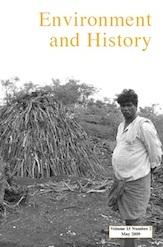
The pollution of the Herbert River with tin dredge effluent after 1944 sparks the first Act specifically to control water pollution in the Australian state of Queensland.