Science and Politics in the International Environment
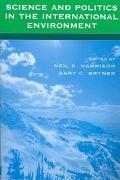
This book seeks to explain what science and politics are in the context of environmental policymaking and how the interplay of science and politics influences international environmental policy.
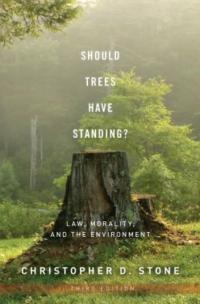

Should Trees Have Standing? continues to serve as the definitive statement as to why trees, oceans, animals, and the environment as a whole should be bestowed with legal rights.
Inspired by courses they’ve developed at Stanford, Mike Osborne and Miles Traer created the Generation Anthropocene podcast, a volunteer-based audio show featuring thought leaders.
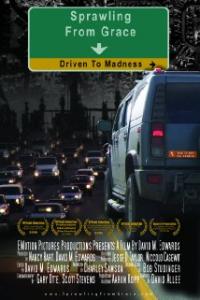
This film criticizes America’s suburban sprawl and its dependence on oil as being unsustainable for the future.
Laurel Peacock on Brenda Hillman’s ecopoetic practice and how we can shift our understanding of our affective relationship to the environment.
In the afterword of a special section on toxic embodiment, Stacy Alaimo distills the collection’s argument for attending to the ways environments, human bodies, and nonhuman bodies are transformed by anthropogenic substances.
Former RCC Fellow Helen Rozwadowski presents her perspectives on the ocean and its history.
Excerpt from Eco-Theology: Essays in Honor of Sigurd Bergmann. Professor Sigurd Bergmann is a former fellow at the Rachel Carson Center.
In this commentary, Stefan Helmreich considers how Hokusai’s famous woodblock print, The Great Wave, has recently been leveraged into commentaries upon the Anthropocene, and how the image has been adapted to speak to the contemporary human-generated global oceanic crisis.
This book chapter examines the 1975 Nordic Council conference at Frostavallen in Sweden as a transnational media event which specifically sought to articulate a green modernity to the outside world.