


Multimedia | film profile
Voices of Transition
This film explores how various communities around the world are transitioning to a more sustainable and local way of life.
This film explores how various communities around the world are transitioning to a more sustainable and local way of life.
A monograph on the history of dunes.

In this special issue on Disempowering Democracies, Gretchen M. Walters and Melis Ece analyze the project development negotiations in a World Bank-led REDD+ capacity building regional project, involving six Central African countries between 2008 and 2011. It explores how the project created a “negotiation table” constituted of national and regional institutions recognized by the donors and governments, and how this political space, influenced by global, regional and national political agendas, led to “instances” of recognition and misrecognition among negotiating parties.
In “The Climate of History: Four Theses,” Dipesh Chakrabarty examined the idea of the Anthropocene—the dawn of a new geological period dominated by human activities—in the context of history and philosophy, raising fundamental questions about how we think historically in an era when human and geological timescales are colliding.This volume of RCC Perspectives offers critiques of these “Four Theses” by scholars of environmental history, political philosophy, religious studies, literary criticism, environmental planning, geography, law, biology, and geology.
Rohan Lloyd explores the relationship between scientific management and preservation of the Great Barrier Reef, with the understanding of anthropogenic climate change marking a pivotal point.
Book profile for Provincialising Nature: Multidisciplinary Approaches to the Politics of the Environment in Latin America by Michela Coletta and Malayna Raftopoulos.

Dale Jamieson introduces the special issue by highlighting American perspectives on different facets of environmental values. These span spiritual and aesthetic dimensions, moral, political, and religious values, and conflicting values in the climate change debate.
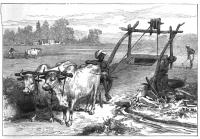
This is a chapter of the virtual exhibition “Famines in Late Nineteenth-Century India: Politics, Culture, and Environmental Justice”—written and curated by sociologist Naresh Chandra Sourabh and economic historian Timo Myllyntaus.
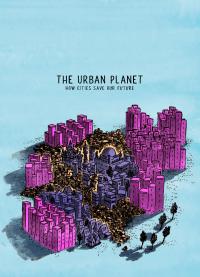
This comic The Urban Planet: How Cities Save Our Future condenses into an illustrated story the fundamental findings of Humanity on the Move: Unlocking the Transformative Power of Cities, a report published by the German Advisory Council on Global Change (WBGU).
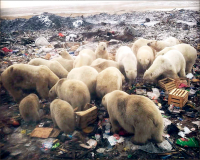
Polar bears invade Russian archipelago and town in Novaya Zemlya, northern Russia.