

Arcadia
Molluscan Explosion: The Dutch Shipworm Epidemic of the 1730s
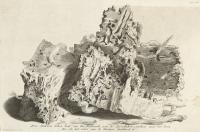
An invasive mollusk called the shipworm (Teredo navalis) attacked coastal dikes in the Netherlands in the 1730s, leading to changes in the design of dikes.
An invasive mollusk called the shipworm (Teredo navalis) attacked coastal dikes in the Netherlands in the 1730s, leading to changes in the design of dikes.

In this Arcadia article, environmental historian Emmanuel Kreike explores the relationship between conservation and deforestation in twentieth-century Namibia.

The construction of the Serre-Ponçon dam in 1955 was the first step in the development of dams in the Durance River, the most regulated waterway in France

A chapter of the virtual exhibition “Beyond Doom and Gloom: An Exploration through Letters,” this letter discusses the origin of negative understandings of our common future. The exhibition is curated by environmental educator Elin Kelsey.
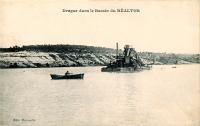
The Canal de Marseille has allowed an improvement in the water supply in the city of Marseille, but also induced environmental issues in its first decades due to strong suspended sediment fluxes.

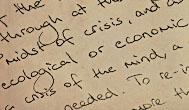
A chapter of the virtual exhibition “Beyond Doom and Gloom: An Exploration through Letters,” this letter discusses an alternative understanding of the crisis of Western societies. The exhibition is curated by environmental educator Elin Kelsey.
Through a short account of French reclamation in Algeria, this paper shows that it is between two divergent notions of environmental agency—environments acted upon and environments acting—that unruliness emerges as a provocative and potentially useful theme for environmental historians.
This paper considers the construction of the Panama Canal in order to analyze the confluence of imperialism, modernity, and environmental control.
This paper considers Cherrapunji, a sleep hilltop village in the remote northeastern frontier of India discovered through the colonial search for a cool place for European sensibilities.