

Multimedia | film profile
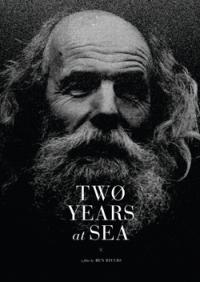
Two Years at Sea
Two Years at Sea tells the story about a middle-aged man who lives a solitary life in a house near the mountains and close to the ocean.
Two Years at Sea tells the story about a middle-aged man who lives a solitary life in a house near the mountains and close to the ocean.
Denis Wood takes a fresh look at what maps do, whose interests they serve, and how they can be used in surprising, creative, and radical ways.
Denis Wood shows how maps are not impartial reference objects, but rather instruments of communication, persuasion, and power.
This book catalyzes the reflection about the aesthetic and spiritual dimension in the environmental humanities and offers transdisciplinary insights into the challenge of sustainability and ongoing changes in our society and environment.

Edward Burtynsky’s photographs, as beautiful as they are horrifying, capture views of the Earth altered by mankind.
The article tells the story of the rise and decline of the significance and visibility of “white coal” and hydroelectricity over the course of the twentieth century.
In the late nineteenth and early twentieth century the ocean was “discovered” as a three-dimensional space filled with living organisms. Investigation of this new frontier caused the world to be reevaluated in a multitude of ways.
Our notions of water are closely linked to the female body and to discourses of objectification and control. It is this critical interlacing of ideas about gender, purity, and power that makes water intensely political.
A cultural and historical analysis of the recent past of the Nile Valley shows how interpretations and perceptions of territory, space, and nature are not necessarily indisputably “true” and definitive principles. On the contrary, they are constructed and, therefore, changeable.
Using Yung Chang’s 2007 documentary film Up the Yangtze, Weik von Mossner unravels the power struggles accompanying the construction of the world’s largest hydroelectric power plant—the Three Gorges Dam in China.