

Arcadia
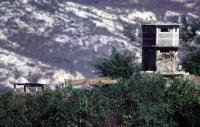
Mountain, Militarized: North Korea, Nuclear Tests, and Nature
This essay examines North Korea’s 2017 nuclear test as an example of how the Korean peninsula’s landscapes became militarized.
This essay examines North Korea’s 2017 nuclear test as an example of how the Korean peninsula’s landscapes became militarized.

The surprising pedigree of a botanical idea.
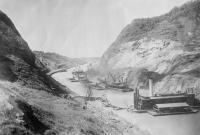
Scientists work to deploy atomic energy in Panama, but fail to overcome the country’s entropic environment.

Charles Hoch, Professor Emeritus of urban planning and policy at the University of Illinois, talks about the challenges of regional planning in the United States. As opposed to Europe where spatial planning prevails, the notion of urban planning is more dominant here, and Hoch uses the Chicago region as a case study.
Belinda Yuen, a town planner and expert in mass housing, presents an account of Singapore’s public housing, the evolution of concepts and strategies for high-rise urban planning, and the diverse common spaces that have been designed for a higher quality of life.
Katharine Suding, plant ecologist and professor at the University of Michigan, outlines the scaling of ecosystem restoration and how scaling is affecting the very notion of restoration in this presentation at the Latsis Symposium 2018.
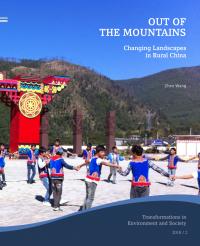
Zhen Wang’s photo essay explores in detail how nearly 40 years of urbanization and rapid economic development have transformed the past, present, and future of the Yi population and of China’s rural and cultural landscapes.
Micheal Richardson investigates the impact of envisioning climate catastrophe in three works, namely George Miller’s film Mad Max: Fury Road (2015), Marina Zurkow’s animation Slurb (2009), and Briohny Doyle’s novel The Island Will Sink (2016).
Erika Amethyst Szymanski investigates the impact of synthetic yeast, which is gaining ground in a variety of foodscapes, and reflects upon the meaning of Terroir that synthetic yeast brings about.
The author attempts to reframe the classical distinction in conservation biology between native and invasive species by referring to migration and settlement of nonhuman beings as diasporas. She uses the introduction of Canadian beavers in Chilean Tierra del Fuego in 1947 as a case study.