

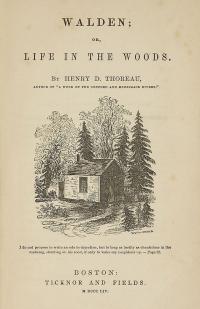
Multimedia | book profile
Walden; or Life in the Woods
First published in 1854, Walden details Thoreau’s experiences over the course of two years in a cabin amidst woodland near Walden Pond.
First published in 1854, Walden details Thoreau’s experiences over the course of two years in a cabin amidst woodland near Walden Pond.

Small Is Beautiful was first published in 1973 and still offers a crucial message for the modern world struggling to balance economic growth with the human costs of globalization.
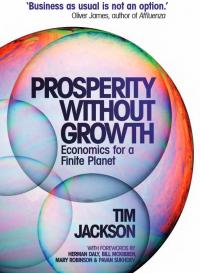
In Prosperity without Growth, Tim Jackson—a sustainability adviser to the UK government—makes a compelling case against continued economic growth in developed nations.

Barlow draws on her extensive experience and insight as a water activist to lay out a set of key principles that show the way forward to what she calls a “water-secure and water-just world.”
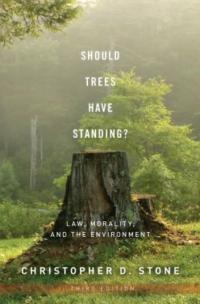
Should Trees Have Standing? continues to serve as the definitive statement as to why trees, oceans, animals, and the environment as a whole should be bestowed with legal rights.

Author, educator, and environmentalist Bill McKibben issues an impassioned call to arms for an economy that creates community and ennobles our lives.
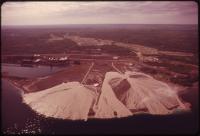
The Reserve Mining Company discharged taconite tailings directly into Lake Superior for 25 years, creating a massive tailings delta and polluting the waters of the lake. When the EPA took Reserve to court in 1973, the town of Silver Bay was divided between a struggle for economic well-being and public health.
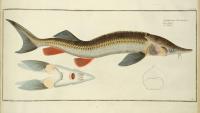
In this chapter of their virtual exhibition “‘Commanding, Sovereign Stream’: The Neva and the Viennese Danube in the History of Imperial Metropolitan Centers,” the authors describe fish resources in St. Petersburg and Vienna and their role in urban life from different perspectives. Fisheries constituted an important part of local economic activities and fishers—both poor professionals and wealthy leisure anglers—were very visible in the cities’ crowds, at their markets, and on the banks of their rivers and canals.

This photo essay looks at how a forgotten local food—the berry-producing Manzanita shrub of northern California—has begun to make its way back into the diets of the local community.
Looks at the relations between “man and the land” through the lens of part-time farming in Italy and China.