

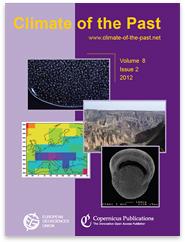
Multimedia | journal article
“Climate-Human-Environment Interactions: Resolving Our Past”
A review of how we can learn from the past about climate-human-environment interactions at the present time and in the future.
A review of how we can learn from the past about climate-human-environment interactions at the present time and in the future.
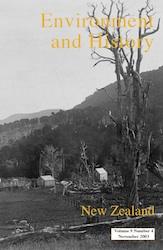
The history of environmental anxiety in nineteenth- and twentieth-century New Zealand can be traced by focusing on problems caused by deforestation.
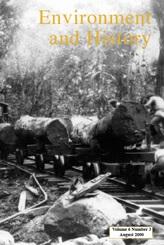
Despite the devastating impact that flooding, drought and fire associated with the 1982/3 and 1997/8 El Nino events had on both the natural environment and human society, there is little information on the persistence or impact similar events may have had in the ‘deeper’ past…

Matthew MacLellan argues that Garrett Hardin’s primary object of critique in his influential “The Tragedy of the Commons” is not the commons or shared property at all—as is almost universally assumed by Hardin’s critics—but is rather Adam Smith’s theory of markets and its viability for protecting scarce resources.
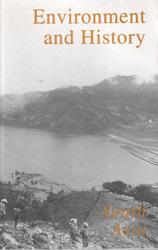
The science of palynology has proved to be a good tool to reconstruct the past, to build up archaeological scenarios and to record climatic changes during the Holocene period. However, the terms employed to denote climate, like arid and humid, are often used without proper definitions, ignoring intricacies of climate…

Anne K. Johnson tests the claims of cultural theory using the formation of climate change policies in Sweden, the United States, and Japan as case studies.

Handley’s article for the Special Commentary section explores Pope Francis’s Laudato si’, questioning the postsecularity of the environmental humanities and the continued dismissal of spiritual and religious discourse in the context of establishing an environmental ethos.
An overview of agricultural sustainability in the eastern Mediterranean Levantine Corridor (the western part of the Fertile Crescent).

This article discusses the limits of warnings issued by scientists and what is needed for actual change.
Climate predictions for western Europe probably underestimate the effects of anthropogenic climate change.