


Multimedia | book profile
State of the World 2015: Confronting Hidden Threats to Sustainability
The 2015 edition examines what we think we know about environmental damage and the hidden threats to sustainability we need to recognize.
The 2015 edition examines what we think we know about environmental damage and the hidden threats to sustainability we need to recognize.
This paper attempts to explore the historic impacts of forest politics and policy on social equity and ecology in Nepal’s Terai region. It is suggested that past forest politics and policies may continue to influence the forest bureaucracy in Nepal and, hence, shape present-day forest management in the Terai.
From the late 1950s onward, Helsinki experienced air pollution from energy generation, industries, waste incineration, and traffic. After having been at its worst in the late 1960s the air quality in Helsinki eventually improved remarkably. This paper examines the reasons for this environmentally advantageous outcome, which was achieved in the absence of a particularly successful environmental policy.

This article explores the relationship between disasters and the population movements in two case studies: The 1908 Messina earthquake and the 1968 Belice Valley earthquake.
This article studies the aetiology underlying water management by exploring the social hermeneutics that determined its construction. It details how science, technology and political relations construct each other mutually, both producing and harnessing the scientific discourse on the environment.

The focus of this paper is on identifying some of the key elements of water policy and governance presented at the 5th IWHA Conference ‘Pasts and Futures of Water.’ The paper also explores the challenges and opportunities facing the international community for living up to the principles of democratic water governance in a context of increasing global uncertainty.
This editorial note introduces the four major conference themes of the 5th International Water History Association (IWHA) Conference ‘Pasts and Futures of Water’ in June 2007: (i) water, health and sanitation; (ii) water, food and economy; (iii) water and the city; and (iv) water governance and policy.
This paper “Water and the City” by Tapio S. Katko, P.S. Juuti, and J. Tempelhoff introduces the topics of growth and development of urban spaces and their comprehensive water infrastructure.
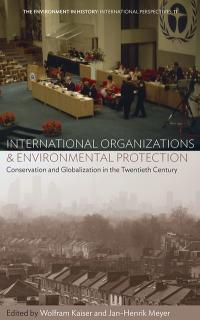
International Organizations and Environmental Protection comprehensively explores the environmental activities of professional communities, NGOs, regional bodies, the United Nations, and other international organizations during the twentieth century. It follows their efforts to shape debates about environmental degradation, develop binding intergovernmental commitments, and—following the seminal 1972 Conference on the Human Environment—implement and enforce actual international policies.
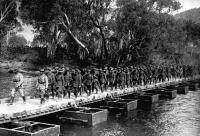
The history of Puckapunyal Military Training Area illustrates how war and the environment interact in sometimes unexpected ways.