"Hunting as a Moral Good"
This article argues that hunting is not a sport, but a neo-traditional cultural trophic practice consistent with ecological ethics, including a meliorist concern for animal rights or welfare.
The paper examines the increasing trend of philanthropic bodies and private individuals to invest in the conservation of Australia’s biodiversity. This is seen as part of a more general Western trend in which Australian organizations are linked to bodies such as the large US-based Nature Conservancy.
Following the establishment of the world’s first national park at Yellowstone (USA) in 1872, the concept was rapidly transferred to Australia, New Zealand and Canada. This article examines this second wave of adoption—and adaption—focussing on five case studies from Australia and New Zealand.
This study reviews the main changes of the vegetation and fauna in northern Portugal during the Holocene, using literature from palaeoecology, archaeology, history, writings from travellers and naturalists, maps of agriculture and forestry and expert consultation.
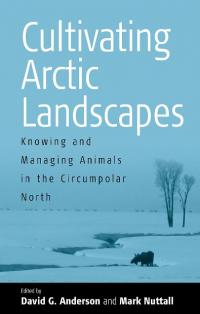
Cultivating Arctic Landscapes gives a well-rounded portrait of wildlife management, aboriginal rights, and politics in the circumpolar north. The book reveals unexpected continuities between socialist and capitalist ecological styles, and addresses the problems facing a new era of cultural exchanges between aboriginal peoples in each region.
The Encyclopedia of Earth is a free, expert-reviewed collection of content contributed by scholars/professionals who collaborate and review each other’s work.
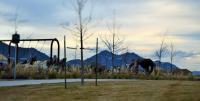
Exploring the cultural and environmental transformation of Rocky Flats from military industrial complex to protected habitat.
Hugo Reinert uses the highly endangered Lesser White-fronted Goose to develop an argument about a certain “biopolitics of the wild”—a particular mode of governing nonhuman life, rooted in certain conditions of visibility and engagement.
Harriet Ritvo’s article for the Living Lexicon for the Environmental Humanities section views the proliferation of introduced species as a symptom rather than a cause, and urges the identification of the real causes through a reconsideration of the morally loaded rhetoric within which biological migration and transplantation are often couched.
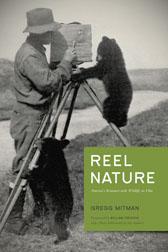
From the early exploits of Teddy Roosevelt in Africa to blockbuster films such as March of the Penguins, Gregg Mitman reveals how changing values, scientific developments, and new technologies have come to shape American encounters with wildlife on and off the big screen.