

Multimedia | image
Nuclear Fission
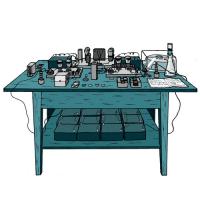
The discovery of the nuclear chain reaction enabled the construction of atomic bombs and nuclear power plants—something never intended by the scientists.
The discovery of the nuclear chain reaction enabled the construction of atomic bombs and nuclear power plants—something never intended by the scientists.
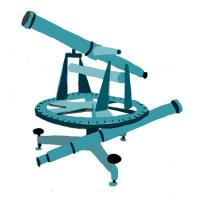
When in about 1800 Bavaria urgently needed money, Georg von Reichenbach founded a factory for scientific instruments and started building precision theodilites to precisely survey the state in order to increase the taxes on land and buildings.

The invention of the spinning jenny in 1764 sparked a movement that would change the lives of people worldwide: the rapid mechanization of the textile industry spurred a period of economic growth.

Geologists from the International Commission on Stratigraphy (ICS) are responsible for deciding how the Earth’s history should be categorized into epochs and eras based on geological deposition in the earth.
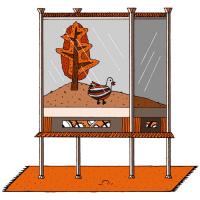
The human species has substantially altered the Earth. We are even able to artificially recreate nature, such as a machine that can imitate the movement and sound of birds.
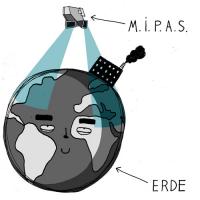
In the 1980s, the findings of Paul Crutzen and his team were used as the basis for the Montreal Protocol’s ban on the use of chlorofluorocarbons (CFCs), identified as the primary cause for the hole in the ozone layer.
This interview with Paul Crutzen is a chapter of the virtual exhibition “Welcome to the Anthropocene: The Earth in Our Hands”—written and curated by historian Nina Möllers.

Eileen Crist argues that the discourse of the Anthropocene refuses to challenge human dominion, proposing instead technological and managerial approaches that would make human dominion sustainable.
Since fossil fuel consumption has been integral to the project of modernity, energy history offers one way of trying to understand the Anthropocene and link the histories of capital and climate.