

Arcadia
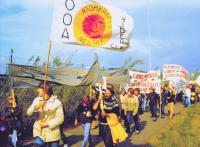
Marching Activists: Transnational Lessons for Danish Anti-Nuclear Protest
Anti-nuclear activism in Denmark was characterized by information campaigns and peaceful marches.
Anti-nuclear activism in Denmark was characterized by information campaigns and peaceful marches.

This article examines mobilization and resistance against pollution in the Alviela River in the Santarém municipality, Portugal, since the 1950s.
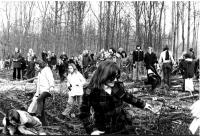
An unexpected group of activists, consisting of mostly farmers and vintners, occupied the construction site of a nuclear reactor near the German town of Wyhl in 1975.

This introductory guide to the Earth First! movement was produced by The Earth First! Journal as a service for Earth First! local groups. It includes the purpose and definition of Earth First!, their philosophy, gatherings, an EF! International section, and EF! projects. This edition focuses on extinction and prevention of wildlife destruction. It contains a guide to direct action by Edward Abbey and a guide for forming Earth First! groups.

This four-page newsletter from the Ukiah Earth First! chapter recounts a number of actions taken in protest against the clearing of old-growth redwoods, provides an update on the Cahto Wildnerness Coalition lawsuit, and shares a call to action.
Fei Sheng traces the development of environmental non-government organizations (ENGOs) in China, and describes the challenges they face in the political and cultural spheres.
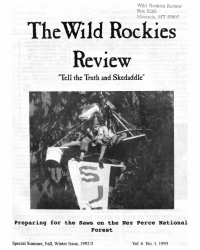
In this special “rant issue,” Rhubarb discusses the idea of industrial collapse, Phil Knight tells of a lone hiker killed by grizzlies, and Jeff Juel reports on planned drilling in the Hall Creek area of the Badger-Two Medicine, home to the grizzly bear, the grey wolf, bald eagle, and other endangered species.

These EXIT Times is the authoritative voice of the Voluntary Human Extinction Movement (VHEMT, pronounced “vehement”). The VHEMT slogan is “May we live long and die out.”
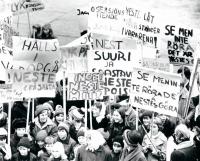
This article studies the “Neste war,” 1970–1972, the first major victory of the environmental movement in Finland.

This article analyzes the recent controversial environmental history of urban parks in Istanbul, Turkey, and Budapest, Hungary, under authoritarian regimes.