


Multimedia | journal
Wild Earth 1, no. 3
Wild Earth 1, no. 3 with essays on hydro development in North America, trans-boundary ecosystem preservation, the central Appalachian wilderness, and the need for deep ecological language.
Wild Earth 1, no. 3 with essays on hydro development in North America, trans-boundary ecosystem preservation, the central Appalachian wilderness, and the need for deep ecological language.
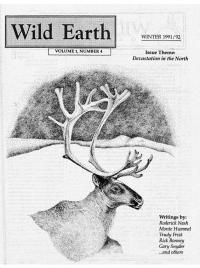
Wild Earth 1, no. 4. on Canadian wilderness laws and national parks, how a proposed copper mine in Canada is threatening the rivers Tatshenshini and Alsek, and the hidden costs of developing natural gas reserves.
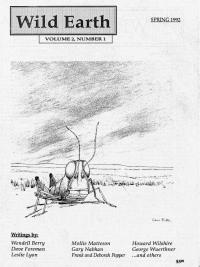
Wild Earth 2, no. 1 with essays on the ecological costs of livestock, bison hunt, trouts and their habitat, “wheeled locusts,” and off-road-vehicle trails on public lands.
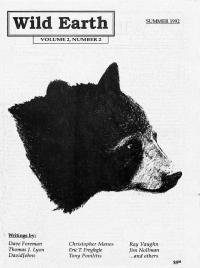
Wild Earth 2, no. 2., with an update on the Wildlands Project and essays on: forest health and forestry, the practical relevance of deep ecology, and ancient forest legislation.
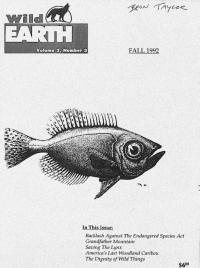
Wild Earth 2, no. 3 about the Endangered Species Act, saving the Lynx, bioregionalism, and America’s last woodland caribou.
Wild Earth 2, no. 4 with essays on environmental devastation and the war in Lebanon, the Colorado River delta, reef protection, and zoos and the “psychology of extinction.”

Brian Baxter makes an argument in favour of person-centricism over ecocentricism.
John S. Akama, Christopher L. Lant, and G. Wesley Burnett use a political-ecological framework in the analysis of the social factors of wildlife conservation in Kenya.
Douglas E. Booth discusses valuation and policy surrounding preservation of old-growth forest ecosystems.
Wilfred Beckerman and Joanna Pasek discuss criticisms of contingent valuation (CV) and allied techniques for estimating the intensity of peoples’ preferences for the environment, concluding that little progress will be made until both sides in the debate recognise what is valid in their opponents’ arguments.