

Perspectives
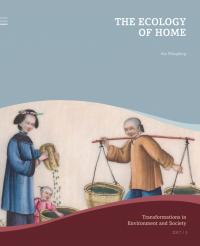
The Ecology of Home
This essay examines environmental thought in China and the West to propose an “ecological history” that offers new ways to think about the human/nature relationship.
This essay examines environmental thought in China and the West to propose an “ecological history” that offers new ways to think about the human/nature relationship.
Vardy and Smith’s article for the Living Lexicon for the Environmental Humanities argues that “resilience signals the pernicious return of structural-functionalism precisely at the moment when much more nuanced, thoughtful, and critical attention should be given to the relationships and differences between and within human and nonhuman populations.”
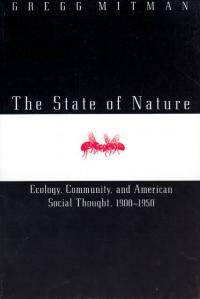
Gregg Mitman examines the relationship between issues in early twentieth-century American society and the sciences of evolution and ecology to reveal how explicit social and political concerns influenced the scientific agenda of biologists at the University of Chicago and throughout the United States during the first half of the twentieth century.
Chrulew’s response to the Papal Encyclical Laudato si’ for the Special Commentary section discusses the appointment of Pope Francis in 2013, and particularly his call to shift from addressing only Catholics to caring for every living entity on Earth.
John Reid-Hresko’s article draws on 18 months of comparative ethnographic research with men and women who are employed and reside in protected areas in northern Tanzania and South Africa’s Kruger National Park.
Using examples from environmental governance and conservation, Esther Turnhout engages critically with the ideal of policy-relevant environmental knowledge.

In this special section on Green Wars, Bram Büscher examines the case of rhino poaching in South Africa, arguing that we are seeing the uneven emergence of new geographies of conservation focused on preempting threats (ontopower).
In this article for a special section on Green Wars, Jared D. Margulies considers Louis Althusser’s theory of ideological state apparatuses (ISAs) for advancing political ecology scholarship on the functioning of the state in violent environments. He uses the example of conservation as ideology in Wayanad, Kerala.
Gustavo A. Garcia-Lopez and Camille Antinori trace and analyze the historical processes driving formation and change of Mexican inter-community forestry associations over time, drawing on survey data and in-depth case studies from two Mexican states.
The author attempts to reframe the classical distinction in conservation biology between native and invasive species by referring to migration and settlement of nonhuman beings as diasporas. She uses the introduction of Canadian beavers in Chilean Tierra del Fuego in 1947 as a case study.