


Multimedia | interviews and talks
“A Political Ecology of Desire and Illicit Trade”
Lunchtime Colloquium at the Rachel Carson Center with Jared Margulies.
Lunchtime Colloquium at the Rachel Carson Center with Jared Margulies.
Lunchtime Colloquium at the Rachel Carson Center with Carmel Finley.

A book by James Borton on overfishing, illegal and unregulated fishing, coral reef destruction and reclamations, and, eventually, on ways of preserving our oceans.

In this Springs article, Miles Powell discusses the history of shark fishing and the impact it had on shark populations as well as how these practices have evolved to this day.

In this episode from the New Books Network podcast, Daniel Macfarlane is interviewed on his recent book, Natural Allies: Environment, Energy, and the History of US–Canada Relations.

In this issue of Earth First! Journal Jeanne Patton gives an update on the protests against factory, held together with Greenpeace. In addition, Kimberly Dawn contributes the second part of her interview with Earth First! activist Peg Millett (part 1. in 16, no. 7), and Radcon presents ideas on how to virtually boycott the world.
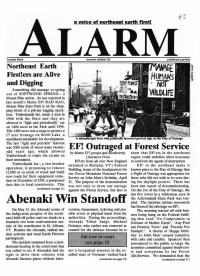
In this first issue of the ALARM to be widely circulated, the editors explain their goals for the publication. Michael Vernon discusses environmental movements, property rights, and the Maine Conservation Rights Institute; Michaela de Liuda calls for attention to biodiversity and paganism; the editors present ALARM’s first “It’s All Bullshit” award; and EF!/Abenaki updates readers on their struggle to stop industrial fishing in the Abenaki River.
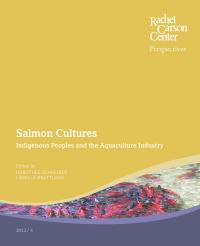
In this volume of RCC Perspectives, diverse salmon cultures—from the aquaculture industry and biology, to northern Sami and First Nations—speak about life and work with salmon.
Fred and Isaac Metallic of the Mi’kmaq community emphasize Indigenous knowledge, treaty rights, and sustainable fisheries management as vital to protecting salmon, cultural heritage, and self-governance despite ongoing challenges.
A long struggle on the part of the Mi’gmaq community of Listuguj to continue fishing, despite arrests and financial pressures, has cleared the way for the resurgent power of Mi’gmaq law to govern the fishery, and to face the salmon aquaculture industry with confidence.