

Multimedia | journal
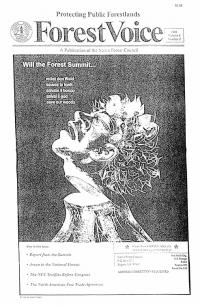
Forest Voice 6, no. 2
This issue of Forest Voice covers the Forest Summit and deforestation debates.
This issue of Forest Voice covers the Forest Summit and deforestation debates.
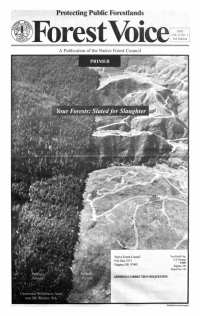
This issue of Forest Voice offers a primer, “Your Forests: Slated for Slaughter.” It includes a summary of the National Forest Protection Acts, a package of draft legislation developed by the Native Forest Council, satellite images comparing deforestation in the U.S. to that in Brazil, and an instructional graphic titled, “Nature Pays, You Pay, Your Children Pay.”
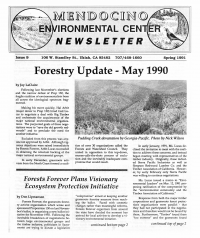
This issue of Mendocino Environmental Center Newsletter covers regional forestry issues and initiatives, the Redwood Summer event to bring attention to the destruction of the redwoods, the environmental consequences of the Gulf War, and a plan for a “conservation power plant” in Sacramento.
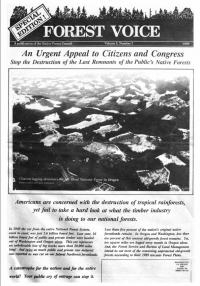
This issue of Forest Voice features photographs of deforested U.S. federal lands and argues that log exporting is both economically and environmentally foolish. It outlines appeals citizens can make to their government representatives to save national native forests.
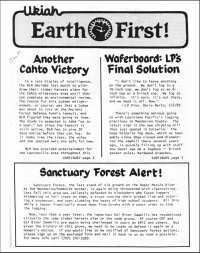
This four-page newsletter describes the ongoing battles between Earth First! and the logging industry, as well as the variety of tactics they employed against the destruction Sanctuary Forest and the Albion River watershed.

Excerpt from Rainforest Radicals: A History of Rainforest Action Network and Transnational Organizing by David Benac.
Eunice Blavascunas explores the environmental history and ethnography of the Białowieża Forest, highlighting the roles of biologists, foresters, and peasant farmers in shaping the forest’s ecology and administrative structures.
Stefan Dorondel writes about agrarian transformations and land-use changes in post-socialist Romania, focusing on the impact of massive social, economic, and political transformations on the natural environment.
Kieko Matteson reflects on her childhood in Vermont, emphasizing how material traces such as stone walls and agricultural features reveal past land use and human-environment interactions.
Excerpt from The State in the Forest: Contested Commons in the Nineteenth Century Venetian Alps.