Polluted Water
This article discusses the shift in perception regarding polluted water. When did perceptions of polluted water change, when was it no longer considered a part of everyday life? And what caused the tide to turn?
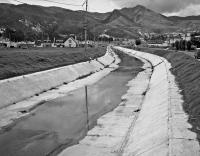
In this chapter of her virtual exhibition “Human-Nature Relations in German Literature,” Sabine Wilke shows how topics of pollution and waste in German-language writing reach back to the nineteenth century, when the production of industrial waste—and pollution of the air, ground, and water—first began to occur on a massive scale. For the German-language version of this exhibition, click here.
This article investigates the pollution of the Ergene River as an outcome of the hegemonic cosmology in Turkey.
The pollution of the Herbert River with tin dredge effluent after 1944 sparks the first Act specifically to control water pollution in the Australian state of Queensland.
This article examines water pollution and its control in the United States from the turn of the twentieth century until after the Second World War, a period during which water pollution became an interstate problem.
Sandlos and Keeling explore Indigenous resistance to arsenic pollution. Indigenous communities mobilized knowledge around environmental pollution and its health impacts. The authors show how this resistance to environmental racism is connected to other Indigenous struggles over industrial development and to issues such as land claims, sovereignty, and colonial dispossession.
In episode 47 of Nature’s Past, a podcast on Canadian environmental history, author Ryan O’Connor discusses the ENGO Pollution Probe and the early years of environmental activism in Canada with Sean Kheraj.
This article examines mobilization and resistance against pollution in the Alviela River in the Santarém municipality, Portugal, since the 1950s.
The Japanese port city Hachinohe plans to reintroduce commercial whaling, but the city’s troubled past challenges the official narrative.