


Perspectives Article
Environmental History with an African Edge
With an emphasis on national parks, this article examines the kinds of environmental edges particular to South Africa and to Africa more generally.
With an emphasis on national parks, this article examines the kinds of environmental edges particular to South Africa and to Africa more generally.
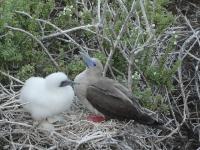
The Galapagos Islands National Park, which was established in 1959, shelters Charles Darwin’s showcase of evolution and has become a testing field for international nature conservation concepts.

Situated on the Polish-Slovak border, the Tatra Mountains are protected by two neighboring National Parks. The history of the parks, which began in the 1880s, is deeply marked by the situation of these mountains on an imperial, and subsequently national, borderland.

This volume of RCC Perspectives, featuring artwork by Australian artist Mandy Martin, is a tribute to the wonderful career of Jane Carruthers.

Bill Bryson introduces the history and ecology of the Appalachian Trail.
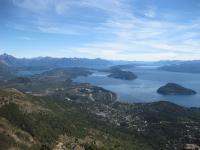
Latin America’s first national park derived from private and public ideas and became a template for regional conservation.
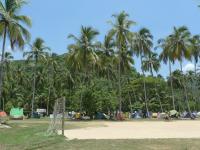
In this Arcadia article, Claudia Leal shows how the early history of Colombia’s Tayrona National Park reveals the extent to which it has been shaped by state policies: evictions, restrictions to land use, and a fierce battle against tourism interests.
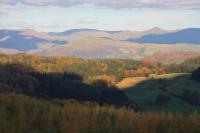
Matthew Kelly describes how national parks were a component of the social democratic transformation of post-war Britain, which quickly became a focus for anxiety about the rise of mass car ownership and agricultural intensification.

This film examines a radical policy implemented by Ecuadorean President Rafael Correa: to leave Yasuni National Park’s oil in the ground and let the industrialized countries make a contribution to the preservation of the planet’s “green lungs.”
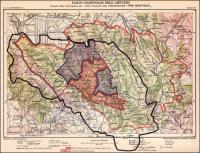
In the early 1920s one of the first European national parks was established in a densely populated area to foster both nature protection and economic growth.