Schlangenlinien: Eine Geschichte der Kreuzotter
Schlangenlinien examines the history of the European Viper and the shift from extermination policies to those of protection and rehabilitation in the nineteenth and twentieth centuries.

Effective strategies for rat control based on ecology were invented in Baltimore in the 1940s. The program, however, did not last.
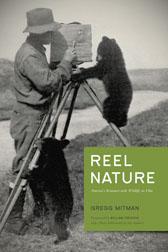
From the early exploits of Teddy Roosevelt in Africa to blockbuster films such as March of the Penguins, Gregg Mitman reveals how changing values, scientific developments, and new technologies have come to shape American encounters with wildlife on and off the big screen.
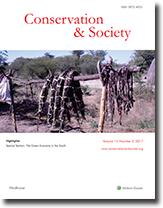
In this Special Section on the Green Economy in the South, V. Corey Wright contributes to the debate about Tanzania’s Wildlife Management Areas (WMAs) and the nature of decentralization. He argues that WMAs represent risk but also an opportunity for rural communities.
Susana Costa, Catarina Casanova, and Phyllis Lee present a study of the obstacles to women’s participation in conservation strategies associated with Cantanhez Forest National Park (CFNP), in Guinea-Bissau, West Africa. The findings revealed that the women felt the Park was responsible for malnutrition in the communities due to damage of crops by wildlife.
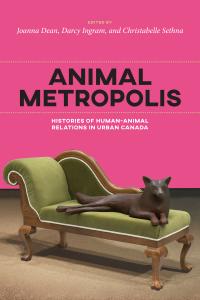
This collection brings a Canadian perspective to the growing field of animal history, ranging across species and cities, from the beavers who engineered Stanley Park to the carthorses who shaped the city of Montreal. Some essays consider animals as spectacle, while others examine the bodily intimacies of shared urban spaces.
McKenzie F. Johnson, Krithi K. Karanth, and Erika Weinthal evaluate compensation as a mitigation policy for human-wildlife conflict around four protected areas in Rajasthan (Jaisamand, Sitamata, Phulwari, and Kumbhalgarh), finding efforts insensitive to local livelihoods.
This article looks at changing perceptions of whales along the coasts of Portugal.
Through a quantitative questionnaire survey conducted in villages around the Nouabalé-Ndoki National Park in northern Congo, the authors assess local attitudes towards conservation and elephant conservation in particular.
The authors delve into the social reasons behind illegal turtle egg harvesting in the La Flor Wildlife Refuge in Nicaragua, based on a survey conducted among 180 households living in Ostional, the largest village in the vicinity of the Refuge.