

Arcadia
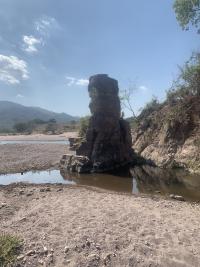
La Muxatena: A Sacred Rock Formation at the Heart of an Indigenous Social Movement for Environmental Rights
Indigenous groups in Nayarit, Mexico, reaffirmed their sacred environmental sites through social movement.
Indigenous groups in Nayarit, Mexico, reaffirmed their sacred environmental sites through social movement.

John R. Gillis critiques the landlocked nature of environmental history, highlighting its neglect of oceans, which comprise most of Earth’s surface and are central to its ecosystems.

Green Versus Gold examines California’s environmental history, ranging from its Native American past to conflicts and movements of recent decades.

In this episode from the New Books Network podcast, Matthew S. Henry is interviewed on his recent book, Hydronarratives: Water, Environmental Justice, and a Just Transition.

This historiographical essay outlines and discusses major trends within European environmental history by highlighting recent discussions and future possibilities regarding collaboration across national borders and contexts, and ultimately arguing for more transnational cooperation within the field of environmental history.
A nuanced treatment of the relation between peasant protests and environment with reference to a broad range of examples from Mediterranean Europe, Latin America, Asia, and Africa.

Earth First! 29, no. 2 features news from the prisoner hunger strike in Greece, and water privatization in Maine, as well as reflections on a primitive lifestyle, on building an anti-capitalist movement for climate justice in Denmark and the US, and on “vengeful animals.”

In this issue of RCC Perspectives, Donald Worster—one of the founders and leading figures in the field of environmental history—examines how China and the United States have attempted to control water.

This issue of Earth First! brings good news from the protests against logging on Albion River, Northern California. In addition, Lynn Jacobs talks about the Pinaleno Mountains, Susan Ring discusses the price of wolves, and George Wuerthner raises awareness about the water consumption of cows in the west.
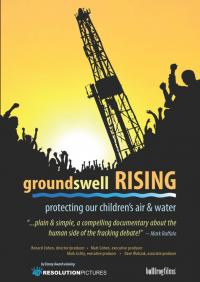
This film shows how the oil and gas industries, rich with political connections, obtained a position of almost untouchable power and how at-risk communities have united to fight back.