


Arcadia
Blood in the Water: A Digital History Project on the Geography of Pontiac’s War, 1763
Digital tools reveal a geographic logic to the violence of Pontiac’s War.
Digital tools reveal a geographic logic to the violence of Pontiac’s War.
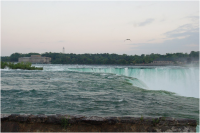
The creation of the Niagara Telecolorimeter helped engineers physically remake Niagara Falls in the mid-twentieth century.
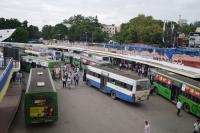
This article investigates the transformation of Bangalore’s Dharmambudhi lake into the central bus terminus.

Alternative Futures brings together 35 essays on India’s future, written by a diverse set of authors: activists, researchers, media persons, those who have influenced policies, and those working at the grassroots. Divided into four sections—Ecological Futures, Political Futures, Economic Futures, and Socio-Cultural Futures—the book covers a wide range of issues including environmental governance, biodiversity, democracy and power, law, agriculture, pastoralism, industry, languages, learning and education, knowledge, health and sexuality among others.
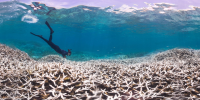
Coral scientists are dealing with an existential crisis and are divided between hope and despair in their approaches to coral conservation.
The author works on the notion of “watershed encounter” as a diverging point in history to analyze which watershed encounters shaped the Chesapeake Bay region. He argues that current restoration efforts, far from solving the current issues, only exacerbate them.

The authors compare the administrative regulations and actions aimed at protecting and conserving isolated wetlands in ten states along the Mississippi River corridor. They highlight the necessity for reliable data for at-risk wetlands to foster conservation practices.
Synthesizing ethnographic case studies from mainland Southeast Asia, the authors critically review the implementation of REDD+, a UN project to reduce emissions from deforestation and forest degradation. They argue that REDD+ maps onto local power structures and political economies in its implementation, rendering it blunt as a tool for change.
Krishna AchutaRao reviews the book Pushing our Limits: Insights from Biosphere 2 by Mark Nelson.

In this chapter from the virtual exhibition “Global Environments: A 360º Visual Journey,” Anna Antonova’s 360º video immerses the viewer in a unique habitat on the Bulgarian coast of the Black Sea: the salt flats in the Atanasovsko Lake near the city of Burgas. She considers these salt flats a natural symbiosis between humans and their coastal environment, which support traditional human labor, industry, and health while simultaneously providing critical avian and aquatic ecosystem habitats.