

Multimedia | journal article
"Human-nature Interactions through a Multispecies Lens"
This article introduces this issue of Conservation and Society, and argues strongly for new place-based conservation through a multispecies lens.
This article introduces this issue of Conservation and Society, and argues strongly for new place-based conservation through a multispecies lens.

The categories and the types of care we assign are very often tenuous and troubled in nature. The articles in this volume explore some of the intricacy, ambiguity, and even irony in our perceptions and approaches to “multispecies” relations.
Caring for one set of species at the cost of another is the subject of Amir Zelinger’s article about bird conservation and its implications for the life of cats in Imperial Germany.
Emily O’Gorman focuses on the Australian pelicans of South Australia’s Coorong region to examine how historical and contemporary ways of protecting these birds have been entangled with class politics, cross-cultural relationships, and the law.
Ursula Münster shows us in her essay on silenced and silent practices of avian care in a postcolonial conservation landscape of South India, that care is never innocent, it plays out within established hierarchies and power relations, and it can reinforce long traditions of imperialism and exclusion.
Susanne Schmitt explores the multifaceted ways in which the Syngnathid family is caught up in networks of care and storytelling.

Schlangenlinien examines the history of the European Viper and the shift from extermination policies to those of protection and rehabilitation in the nineteenth and twentieth centuries.

The killing of possums as “pests” is framed as a caring relationship towards Aotearoa/New Zealand’s natural environment.
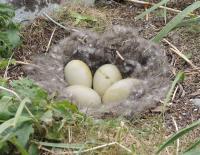
Little-known information is presented on the efforts to set up eider farms in the USSR between 1930 and 1960.
Using the example of the Stirling Range National Park, Andrea Gaynor shows that the dualistic practice of reservation does not necessarily ensure the preservation or conservation of landscapes and ecosystems.