Multimedia | journal article
"The Origins and Purpose of Eco-Innovation"
The article aims to provide a historical perspective on the concept of eco-innovation, its different meanings and its position in the modern debate around sustainability.
The article aims to provide a historical perspective on the concept of eco-innovation, its different meanings and its position in the modern debate around sustainability.
This article analyzes how World War II impacted both the marine and the terrestrial environment of the North Atlantic, triggered major political and economic decisions with profound cultural implications, and eventually induced a change in ocean management.
The article examines how the Japanese occupation of Malaysia between 1942 and 1945 highlights the interrelation between war and the natural environment as forming an integral part of the national narrative and global environmentalism.
This study draws on economic and environmental historical approaches to explore the consumption-conservation nexus in the use of African natural resources. It explores environmental changes resulting from a range of interactive factors, including climate, population, disease, vegetation and technology.
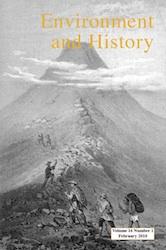
This article studies the aetiology underlying water management by exploring the social hermeneutics that determined its construction. It details how science, technology and political relations construct each other mutually, both producing and harnessing the scientific discourse on the environment.

The Machine upgraded by Dufrayer was able to pump the impressive amount of 20,000 m3 per day but new concern threatened its existence: the Seine waters growing pollution.
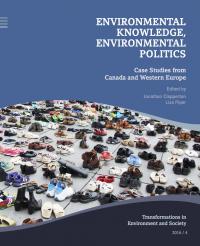
Trim’s article focuses on “countercultural environmentalists” and an alternative development program in Prince Edward Island, Canada. The project’s history raises questions about the consequences of treating environmental issues as technical problems to be solved with innovation and new technology. This approach both depoliticizes environmental issues and embeds them into new political structures.

A history of German agricultural technologies and the environmental problems they have given rise to since the nineteenth century.

Inspired by courses they’ve developed at Stanford, Mike Osborne and Miles Traer created the Generation Anthropocene podcast, a volunteer-based audio show featuring thought leaders.