

Perspectives Article
A Tale of Two Cities: Climate Policy in Münster and Dresden
Cindy Sturm looks at differences in climate-related policymaking Münster and Dresden.
Cindy Sturm looks at differences in climate-related policymaking Münster and Dresden.
Goodbody examines the literary work Pandaemonium and its role in a research project to promote debate on climate change.
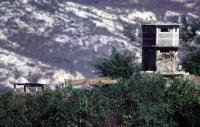
This essay examines North Korea’s 2017 nuclear test as an example of how the Korean peninsula’s landscapes became militarized.

Alternative Futures brings together 35 essays on India’s future, written by a diverse set of authors: activists, researchers, media persons, those who have influenced policies, and those working at the grassroots. Divided into four sections—Ecological Futures, Political Futures, Economic Futures, and Socio-Cultural Futures—the book covers a wide range of issues including environmental governance, biodiversity, democracy and power, law, agriculture, pastoralism, industry, languages, learning and education, knowledge, health and sexuality among others.
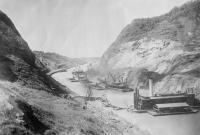
Scientists work to deploy atomic energy in Panama, but fail to overcome the country’s entropic environment.

This joint presentation by Varro Laszlo and Stefan Pfenninger for the ESC Symposium 2017: Global Energy Challenge provides a framework to understand the economics behind energy consumption in the past, present, and future.
Guy DeLeonardo of General Electric (GE) highlights the market, business, and technology in energy generation. Motivated by the 1.2 billion people who lack access to reliable electricity, DeLeonardo talks about how renewable resources enter the energy production market through technology, and what alternatives to our present modes of productions can achieve better energy use.
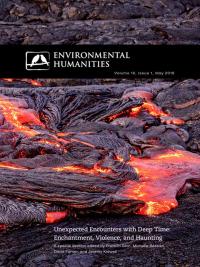
Stefan Skrimshire considers the ethical question of how to communicate with future human societies in terms of long-term disposal of radioactive fuel. He proposes that the confessional form (as propagated by Saint Augustine and critiqued by Derrida) may become increasingly pertinent to activists, artists, and faith communities making sense of humanity’s ethical commitments in deep time.
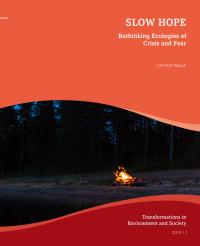
This essay explores the possibility of “slow hope” for positive environmental change.
The fifth episode of the Crosscurrents podcast series, John Sandlos interviews Ashlee Cunsolo on the concept of ecological grief among indigenous communities in Labrador, Canada; Sean Kheraj speaks about the history of the Trans Mountain Pipeline Project.