Nature's Past episode 48: "Ecotones and Saskatchewan History"
In episode 48 of Nature’s Past, a podcast on Canadian environmental history, Sean Kheraj speaks with Merle Massie about her book Forest Prairie Edge: Place History in Saskatchewan.
Climate change impacts both the goals of corn breeders, and their current everyday research.
The authors investigate how land cover, land use, and protected area management affects communities around a forest reserve in the Philippines. They conclude that incorporating local livelihoods into forest conservation strategies results in a measure of sustainability and positively impacts the socioeconomic well-being of communities near the protected area.
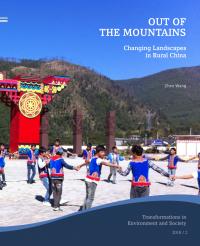
Zhen Wang’s photo essay explores in detail how nearly 40 years of urbanization and rapid economic development have transformed the past, present, and future of the Yi population and of China’s rural and cultural landscapes.
Erika Amethyst Szymanski investigates the impact of synthetic yeast, which is gaining ground in a variety of foodscapes, and reflects upon the meaning of Terroir that synthetic yeast brings about.
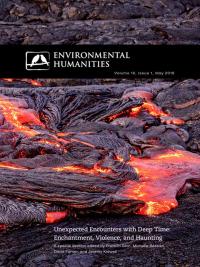
This article focuses on contemporary literary and musical interpretations of changing relationships between humans and the environment in Mongolia. The author explores how these works relate to deep time, and crosshatches biographical, mythological, and geologic understandings of time.
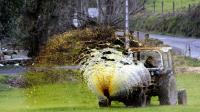
This article investigates the problem of defining technological change based on environmental sustainability criteria in Galicia.
The author investigates the lives of Tibetan pastoralists in alpine wetlands, how they understand wetlands, and how politics, market forces, and religious norms cooperate to produce their relationships with their livestock and their lands.
In this chapter from the virtual exhibition “Global Environments: A 360º Visual Journey,” Sarah Elizabeth Yoho’s 360° video captures the process of constructing a dry stone wall in Italy’s Cinque Terre. In cooperation with community organization Tu Quoque Vernazza, it was filmed over nine days and is shown in time-lapse. The camera captures the grapevine’s point of view of Cinque Terre life.
In this exhibition, ENHANCE ITN doctoral researchers showcase short virtual reality video installations that emerged out of their own empirical and ethnographic fieldwork. The videos work by tracking, rendering, and displaying full-field visual, sonic, and tactile data in a context in which the viewer has full control and is empowered to decide what to look at, listen to, and feel—or which story to experience.