How Do Humans and Locusts Make Space in an Early Modern Chinese Grain Field?
David Bello explores the fraught struggle between humans and locusts for occupancy of the agricultural niches created by farmers during China’s Qing dynasty.
Pest control was a political act in late-nineteenth-century Hawaiʻi, helping sugarcane planters pursue annexation to the United States.
Aquatic dead zones result from pollution caused by excessive fertilizer runoff and wastewater discharge. Their number and extent are increasing.
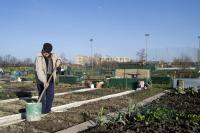
In 1980, Modena was the first city in Italy to introduce a law recognizing social urban allotments.
Veit Braun explores the troubling and often contradictory nature of care, revealing the restrictions of simplifying the duality of caring or violent states.
Rachel Carson testifying before the Senate Government Operations subcommitte.
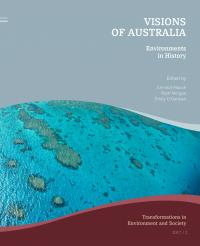
The contributions in this volume explore the way that Australasian environments have been envisioned, worked, and changed in the past, and how ideas about places inform the present and future of the continent.
Twigg traces the journey of Wimmera ryegrass from Europe to Australia, exploring the profound role it has played in shaping farming practices in southern Australia.
Katie Holmes explores the making of masculinity and the nation-making activity of agricultural practices in Billy Boyd’s photography of settlers in Australia’s Mallee Country.
Using the example of the Stirling Range National Park, Andrea Gaynor shows that the dualistic practice of reservation does not necessarily ensure the preservation or conservation of landscapes and ecosystems.