


Arcadia
A Milestone on the Road to Independence? Singapore’s Catastrophic 1954 Floods
The flooding in Singapore in 1954 was one of the most significant floods on the island in the twentieth century.
The flooding in Singapore in 1954 was one of the most significant floods on the island in the twentieth century.

Potrayal of the devastation caused by a massive flood along stretches of the Danube, Neckar, Main, and Rhein in January 1651.
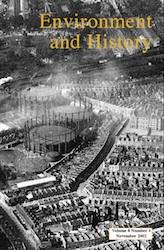
This paper attempts to demonstrate the nature of human impact on forest cover and flooding in the Annecy Petit Lac Catchment in pre-Alpine Haute Savoie, France, between 1730 and 2000.
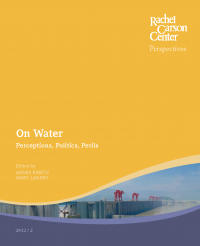
The paper addresses various ways that water is constructed as “dangerous,” whether because there is too much (floods), too little (droughts), or because it is polluted. Mauch emphasizes that although water catastrophes have a natural origin, their effects are primarily social.

The authors take Shucheng County as a case study to reconstruct the variations of population and land use in the last 500 years, and to examine their influence on the environmental changes in this region.
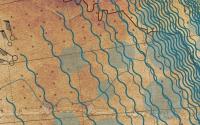
This project looks at the historical intersections between environmental change and migration, and is particularly interested in climate-induced movements of people in the past.

A frontier environmental history of Cossack settlers in the North Caucasus reveals some of the weaknesses of the Russian imperial mission.

In 1947, inhabitants of Yakutsk gained access to potable groundwater from below the permafrost layer for the first time.
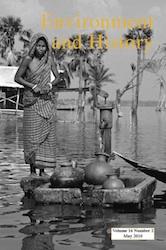
This paper “Water and the City” by Tapio S. Katko, P.S. Juuti, and J. Tempelhoff introduces the topics of growth and development of urban spaces and their comprehensive water infrastructure.

This article analyzes how people in the Bolivian Andes cope with environmental stress. Specifically, it examines the role environmental migration - a strategic mechanism to build up financial, productive, and social capital - plays in how people cope with climate change.