


Multimedia | interviews and talks
“The Ghost Dance Movement”
Louis Warren on “The Ghost Dance Movement.”
Louis Warren on “The Ghost Dance Movement.”

This paper argues that a full understanding of environmentalism requires seeing it as a secular faith, movement concerned with ultimate questions of humans’ place and purpose in the world.
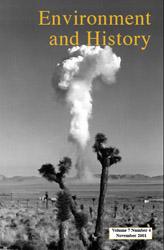
The Conservation Society was the first environmental society in the UK. It was founded in 1966 in response to the then widely perceived global threat of over-population…

This article applies new understandings of environmental justice theory to a specific local case study. It uses a broader conception of environmental justice theory to further our understanding of the rise of the German anti-nuclear movement.

In this article, Andrew Light and Aurora Wallace highlight several examples of how environmental architecture has combined success and failure at taking a broader view of environmental questions, with a specific focus on one green skyscraper that may be good for the natural environment but not necessarily for the human environment of the city.
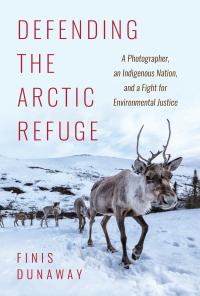
Excerpt from Defending the Arctic Refuge: A Photographer, an Indigenous Nation, and a Fight for Environmental Justice.
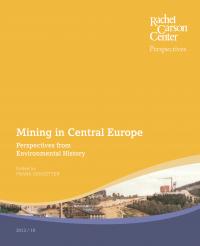
Hollsten focuses on the mercury mines at Idrija in order to trace the movement of this material and the various ways its history intersects with human history.
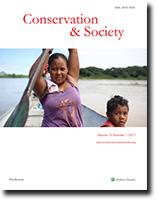
The author investigates the lives of Tibetan pastoralists in alpine wetlands, how they understand wetlands, and how politics, market forces, and religious norms cooperate to produce their relationships with their livestock and their lands.
In her article Annelie Sjölander-Lindqvist highlights several examples of how environmental architecture has combined success and failure at taking a broader view of environmental questions.
This article argues that in contemporary Wayanad in Kerala, southern India, human-animal relations are embedded in a history of ecological modernity composed of three modes of encounter between agrarian change (capitalist settler agriculture) and forest conservation (state-led and globalizing). It suggests that the notions of “frontier,” “fortress,” and (precarious) “conviviality” best capture the historical and emerging environmental relations in this environment of crisis.