


Multimedia | journal article
“Human Overpopulation: The Elephant in the Greenhouse”
In this Springs article, professor Helen Tiffin considers the role of human overpopulation in the environmental crisis.
In this Springs article, professor Helen Tiffin considers the role of human overpopulation in the environmental crisis.
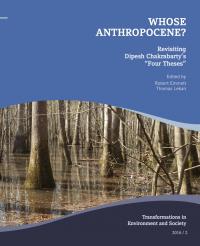
In “The Climate of History: Four Theses,” Dipesh Chakrabarty examined the idea of the Anthropocene—the dawn of a new geological period dominated by human activities—in the context of history and philosophy, raising fundamental questions about how we think historically in an era when human and geological timescales are colliding.This volume of RCC Perspectives offers critiques of these “Four Theses” by scholars of environmental history, political philosophy, religious studies, literary criticism, environmental planning, geography, law, biology, and geology.
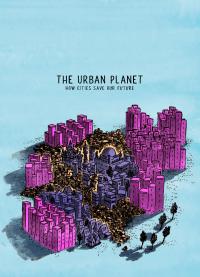
This comic The Urban Planet: How Cities Save Our Future condenses into an illustrated story the fundamental findings of Humanity on the Move: Unlocking the Transformative Power of Cities, a report published by the German Advisory Council on Global Change (WBGU).

Carbon Nation is a documentary movie about climate change solutions.
The authors seek to ascertain if ASEAN can respond to regional human-induced environmental problems given existing problems of national sovereignty and the interest-based character of ASEAN-type associations, since ASEAN’s goal, in contrast to that of the EU, has been regional cooperation rather than regional integration. The aim is to highlight the status of the respective policy frameworks and exemplify areas in which the regions can learn from one another in the field of air pollution, given its global relevance for climate change.
The Encyclopedia of Earth is a free, expert-reviewed collection of content contributed by scholars/professionals who collaborate and review each other’s work.
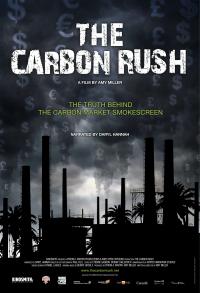
This film explores the negative impacts of the multi-billion dollar carbon offsetting industry on those people who are most impacted but least heard.
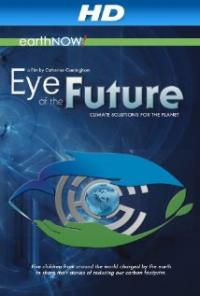
This drama shows how five children of United Nations ambassadors are called upon by Earth to create a sustainable future and find solutions to prevent further damage.
This interview with Paul Crutzen is a chapter of the virtual exhibition “Welcome to the Anthropocene: The Earth in Our Hands”—written and curated by historian Nina Möllers.
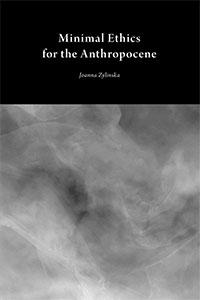
In Minimal Ethics for the Anthropocene, Joanna Zylinska outlies an ethical framework that could help humans assume responsibility for various occurrences in the universe across different scales. Her goal is not so much to tell us how to live but rather to allow us to rethink “life” and what we can do with it, in whatever time we have left. The book embraces a speculative mode of thinking that is more akin to the artist’s method; it also includes a photographic project by the author.