

Multimedia | Env. blogs & websites
The Encyclopedia of Earth
The Encyclopedia of Earth is a free, expert-reviewed collection of content contributed by scholars/professionals who collaborate and review each other’s work.
The Encyclopedia of Earth is a free, expert-reviewed collection of content contributed by scholars/professionals who collaborate and review each other’s work.

In this commentary, Stefan Helmreich considers how Hokusai’s famous woodblock print, The Great Wave, has recently been leveraged into commentaries upon the Anthropocene, and how the image has been adapted to speak to the contemporary human-generated global oceanic crisis.
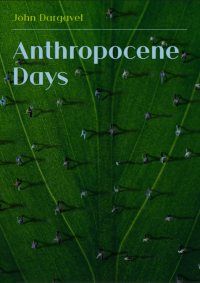
A book by John Dargavel on how humans experience the Anthropocene in everyday life.
This interview with Paul Crutzen is a chapter of the virtual exhibition “Welcome to the Anthropocene: The Earth in Our Hands”—written and curated by historian Nina Möllers.

In this chapter of her virtual exhibition, “Human-Nature Relations in German Literature,” Sabine Wilke examines mountains and glacial environments in German-language literary descriptions. Whereas the German Romantic poets still highlighted mountainous nature as deeply ambiguous, Goethe’s Faust tried to understand mountainous nature in its materiality through scientific studies. Modernism focuses on the more often destructive results of human-nature entanglements. For the German-language version of this exhibition, click here.
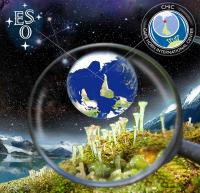
The introduction to the virtual exhibition “From Hand Lenses to Telescopes: Exploring the Microcosm and Macrocosm in Chile’s Biocultural Laboratories.”