"Vacating the Floodplain: Urban Property, Engineering, and Floods in Brisbane (1974-2011)"
Margaret Cook exposes the dominant socio-economic and political values that shaped flood management between 1974 and 2011 in Brisbane, Queensland, Australia.
In their article, William R. Sheate and J. Ivan Scrase argue that for a risk-oriented framing to succeed, new assumptions about causation and a new ethical outlook are now needed.
This paper attempts to demonstrate the nature of human impact on forest cover and flooding in the Annecy Petit Lac Catchment in pre-Alpine Haute Savoie, France, between 1730 and 2000.
In this episode from the New Books Network podcast, William Carruthers is interviewed on his recent book, Flooded Pasts: UNESCO, Nubia, and the Recolonization of Archaeology.
Emily O’Gorman examines the ways in which ducks as well as people negotiated the changing water landscapes of the Murrumbidgee River caused by the creation of rice paddies.
Research on climatic variations in the sixteenth century has stressed the exceptionality of extreme events, but the case of the lower Po basin, where lack of instrumental data renders the concept of exceptionality complex and relative, shows that this is not necessarily valid.
Susie Hatmaker investigates the largest flood of coal ash in United States history in 2008 as an event at once monumental and insignificant.
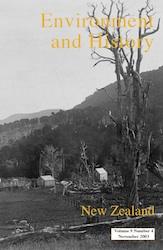
The history of environmental anxiety in nineteenth- and twentieth-century New Zealand can be traced by focusing on problems caused by deforestation.
The forest area in Switzerland has been expanding for more than one hundred years, after a long period of contraction culminating in an apparently accelerated phase of deforestation in the first half of the nineteenth century…
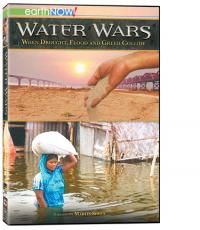
This film examines attempts by communities and experts around the world to protect their water resources in the face of global warming, pollution, and political conflict.