


Multimedia | interviews and talks
Slat, Boyan, "How the Oceans Can Clean Themselves"
Boyan Slat combines environmentalism, creativity, and technology to tackle global issues of sustainability and pollution.
Boyan Slat combines environmentalism, creativity, and technology to tackle global issues of sustainability and pollution.

Have you ever wondered what big data baseball has to do with air pollution? In Episode 7 of Crosscurrents, host John Sandlos speaks with Dr. Anthony Heyes, an environmental economist researching the impact of urban air pollution.

Shannon Cram explores the slippery subjectivities of nuclear waste and nature at Washington State’s Hanford Nuclear Reservation, examining how this space is framed as both pristine habitat and waste frontier. She examines Hanford’s biological vector control program through the fruit fly and discusses how vector control uses instances of nuclear trespass to articulate the boundary between contaminated and uncontaminated. She concludes that nature is being recruited to do what the U.S. Department of Energy cannot: solve Hanford’s nuclear waste problem.
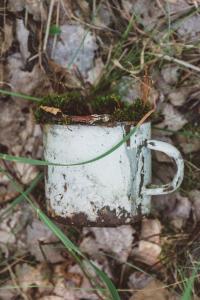
This chapter from the virtual exhibition “The Life of Waste” sheds light on what people think waste is and is not, the cultural and normative conceptions of waste, and forms and landscapes of waste.
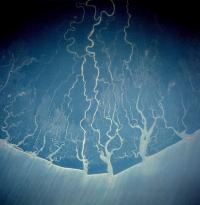
The article focuses on the role of militants in compounding the problem of environmental degradation in the Niger Delta region in Nigeria.
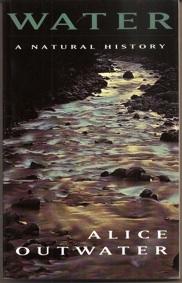
An environmental history of waterways in the United States.
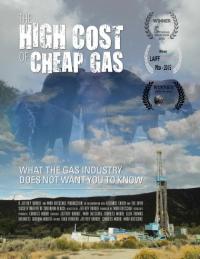
This film examines lessons learnt from fracking in the US state of Colorado as the practice quietly expands to protected areas around the world.
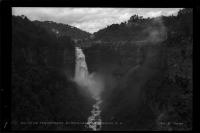
A 20th-century photograph of Salo de Tequendema in Colombia, taken by Gumersindo Cuéllar Jiménez.

In this article, Sasha Litvintseva examines the history and materiality of asbestos to theorize toxic embodiment through the mutuality of the haptic sense and the breaching of boundaries of inside and outside. She develops this through an analysis of her own film project Asbestos (2016), shot at the mining town of Asbestos, Quebec.
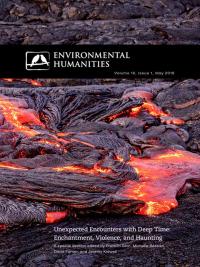
The authors detail their experience of Puchuncavi, the largest, oldest, and most polluting industrial area in Chile. They approach it from a multidisciplinary viewpoint as an experience of the Anthropocene and advocate for an enhanced pedagogy of care born of our inherited pasts and of engagement, interest, and becoming as response-ability.