


Multimedia | book profile
The Search for the Ultimate Sink: Urban Pollution in Historical Perspective
A collection of essays exploring the production and disposal of wastes in the American city since 1850.
A collection of essays exploring the production and disposal of wastes in the American city since 1850.
An analysis of environmental policy in China with a focus on the regulation of water pollution.

Chronicles how industry developed a continental perspective in a shared regional space, the mineralized West, and how successful efforts of governments and citizens to protect the environment evolved.
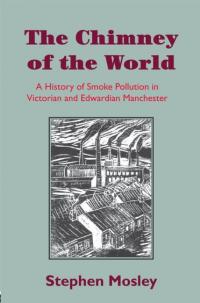
Stephen Mosley examines three aspects of Victorian and Edwardian Manchester’s smoke situation: its magnitude and impact on the town, the rhetoric and culture of smoke, and the (unsuccessful) campaigns to control it.
Garbage, wastewater, and hazardous waste: these are the lenses through which Melosi views nineteenth- and twentieth-century America. In broad overviews and specific case studies, Melosi treats the relationship between industrial expansion and urban growth from an ecological perspective.
Astrid M. Eckert’s West Germany and the Iron Curtain takes a fresh look at the history of Cold War Germany and the German reunification process from the spatial perspective of the West German borderlands that emerged along the volatile inter-German border after 1945.
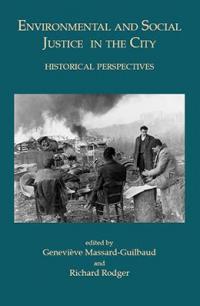
The world is full of environmental injustices and inequalities; yet few European historians have tackled these subjects head on, nor have they explored their relationships with social inequalities.
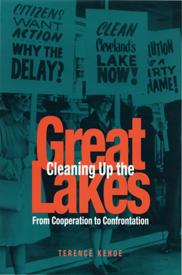
An account of how water pollution control policy emerged during the seminal decades of environmental activism, with reference to the largest group of freshwater lakes in the world: the Great Lakes.
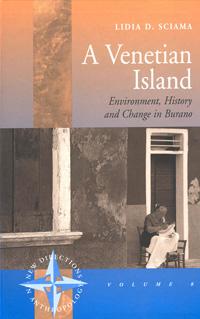
Based on ethnographic and archival data, this in-depth study of the Venetian island of Burano shows how its inhabitants develop their sense of a distinct identity.

This collection investigates the emergence of specific toxic, pathogenic, carcinogenic, and ecologically harmful chemicals as well as the scientific, cultural and legislative responses they have prompted.