

Multimedia | film profile
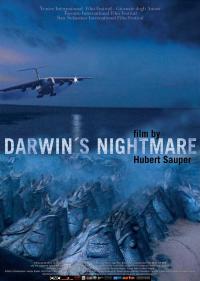
Le Cauchemar de Darwin [Darwin's Nightmare]
Darwin’s Nightmare is a story about people in the North and South, about globalization, and about fish.
Darwin’s Nightmare is a story about people in the North and South, about globalization, and about fish.
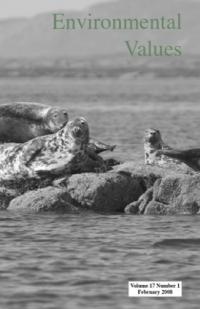
In this paper, arguments for ecosystems service valuation are critically appraised and the case for a model leading to value pluralism is presented.
In this paper, the author argues that species may also be native or non-native to human communities and that, by way of an analogy with varieties of domesticated and cultivated species, that this sense of nativity is grounded by the cultural relationships human communities have with species.
This article looks at the proposed global biodiversity census, which aims to take inventory of every species on earth as a response to anthropogenic species extinction.
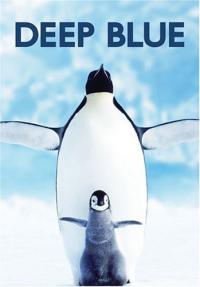
Deep Blue is an underwater exploration into the secret lives of sea creatures.
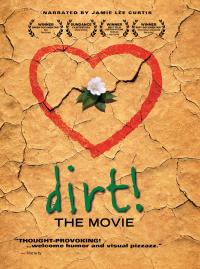
Dirt! The Movie takes a humorous and substantial look into the history and current state of the living organic matter that we come from and will later return to.
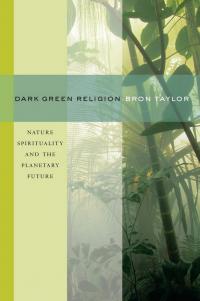
Bron Taylor examines the evolution of “green religions” in North America and beyond.
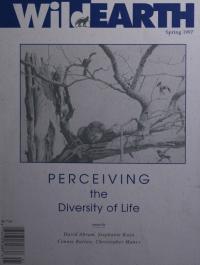
In Wild Earth 7, no. 1 David Abram rediscovers our animal senses, Stephanie Kaza analyzes assumptions and stereotypes about human-nature relations, Connie Barlow reflects on the epic of evolution, and Christopher Manes reflects on a meaningful relationship with the wild.
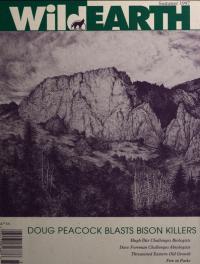
In Wild Earth 7, no. 2 Doug Peacock presents his field report on the Yellowstone bison slaughter, Reed Noss writes about endangered major ecosystems of the United States, and Virginia Abernethy analyzes if and how population growth discourages environmentally sound behavior.
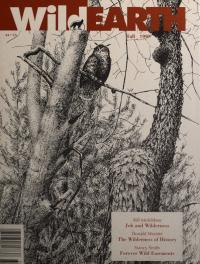
Wild Earth 7, no. 3 features contributions by Bill McKibben on “Job and Wilderness;” Donald Worster on “The Wilderness of History;” Richard Harris on the rivers of Catalonia, Spain; and Andrew Kroll and Dwight Barry on the integration of conservation and community in Colorado.