

Multimedia | book profile
Rethinking the Power of Maps
Denis Wood takes a fresh look at what maps do, whose interests they serve, and how they can be used in surprising, creative, and radical ways.
Denis Wood takes a fresh look at what maps do, whose interests they serve, and how they can be used in surprising, creative, and radical ways.
Denis Wood shows how maps are not impartial reference objects, but rather instruments of communication, persuasion, and power.
The article tells the story of the rise and decline of the significance and visibility of “white coal” and hydroelectricity over the course of the twentieth century.
In the late nineteenth and early twentieth century the ocean was “discovered” as a three-dimensional space filled with living organisms. Investigation of this new frontier caused the world to be reevaluated in a multitude of ways.
Our notions of water are closely linked to the female body and to discourses of objectification and control. It is this critical interlacing of ideas about gender, purity, and power that makes water intensely political.
The article describes how, ultimately, it was precisely the transitory nature of ice that undermined a successful and lasting presentation of power in St. Petersburg, Russia.

Tim Jackson delivers a piercing challenge to established economic principles, explaining how we might stop feeding the crises and start investing in our future.
Focusing on the Serengeti, this essay argues that nature and natural resources in Africa are framed as “inverted commons”: a special commons that belongs to the entire globe, but for which only Africans pay the real price in terms of their conservation.
This article looks at how the ongoing processes of border-making are experienced and negotiated by the ethnic minorities who live in the Himalayan mountain peripheries.
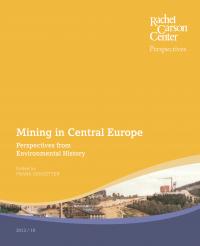
The article traces the history of mining and smelting in Ramsbeck, Germany, showing how conflicting interests between mining and agriculture were negotiated.