

Multimedia | book profile
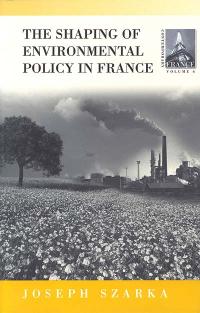
The Shaping of Environmental Policy in France
Joseph Szarka presents and evaluates environmental policy-making in France at a time when environmental problems are growing in complexity and gravity.
Joseph Szarka presents and evaluates environmental policy-making in France at a time when environmental problems are growing in complexity and gravity.

Jost Halfmann illustrates the differences between images of risk by comparing the American and German anti-nuclear movements.
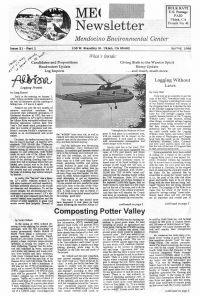
This issue of Mendocino Environmental Center Newsletter reports on protests against the deforestation of the Albion River watershed; composting the Potter Valley, updates on Headwaters Forest, wolves, hemp, “Economic Aspects of Ecoforestry,” and candidate’s positions for an upcoming election for Congress, State Assembly, and county supervisor. Charles Sullivan writes on “Giving Birth to the Warrior Spirit: The End of Environmentalism.”

In episode 47 of Nature’s Past, a podcast on Canadian environmental history, author Ryan O’Connor discusses the ENGO Pollution Probe and the early years of environmental activism in Canada with Sean Kheraj.

In this episode from the New Books Network podcast, Matthew S. Henry is interviewed on his recent book, Hydronarratives: Water, Environmental Justice, and a Just Transition.

Timothy O’Riordan and Andrew Jordan discuss the place of the precautionary principle in contemporary environmental politics, arguing that its future looks promising but not assured.
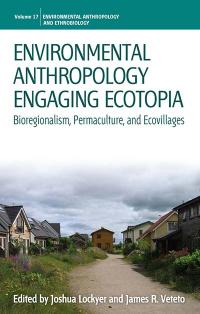
Environmental Anthropology Engaging Ecotopia brings together case studies from across the globe to reveal underlying cultural ontologies and call for more integration between the work of scholars and practitioners.

This paper examines the contestation of two forms of environmentalism, institutional ecomodernism versus a grassroots ecopopulism within the context of the ongoing dispute between a local community in the west of Ireland and both multinationals and the state, who are attempting to run gas pipelines from the Atlantic Corrib Field through the rural community’s lands.
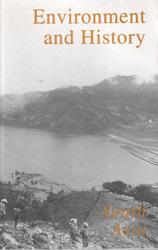
Two broad themes taken up in the literature will be the focus of this essay: how far colonialism was an ecological watershed, and how producers responded to new pressures. The third issue is of what we can or should learn (or unlearn) from the colonial experience.
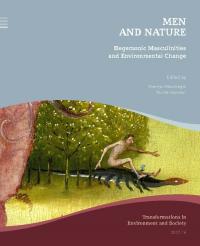
The essays in this collection explore how masculine roles, identities, and practices shape human relationships with the more-than-human world.